

Table of Contents
- What Makes Coffee Specialty Grade
- The Specialty Coffee Grading Scale Explained
- The Cupping Process: How Specialty Coffee Is Evaluated
- Difference Between Specialty and Commercial Coffee
- Gourmet Coffee Beans: Single-Origin vs. Blends
- What Specialty Coffee Means for Farmers and the Environment
- How to Identify Specialty Coffee at Home
- Conclusion
Last Updated: August 21, 2026
What Makes Coffee Specialty Grade
Specialty coffee is a measurable standard that separates premium beans from commodity-grade coffee through rigorous evaluation, traceability, and distinctive characteristics. At Christ Coffee, we focus exclusively on specialty-grade beans because the difference in quality is immediate. When you brew specialty coffee, you're tasting meticulous work: smallholder cooperatives hand-selecting ripe cherries, precise post-harvest processing, and careful roasting that honors the bean's unique profile. Commodity coffee prioritizes volume and cost-efficiency, often mixing beans from multiple origins without attention to individual character.
The foundation of specialty coffee grading is the Specialty Coffee Association (SCA), which established standardized evaluation criteria that define what makes coffee specialty grade. This system ensures consistency across the industry and gives consumers confidence that their premium coffee meets objective standards.
The Specialty Coffee Grading Scale Explained
The SCA's 100-point scoring system is the industry standard for evaluating what makes coffee specialty grade, breaking down coffee quality into measurable attributes and creating a common language for producers, roasters, and consumers.
The 80-Point Threshold
A score of 80 points or higher is the defining benchmark for specialty coffee. This threshold represents a qualitative leap in cup quality, flavor complexity, and overall experience. Coffees scoring below 80 are classified as commercial grade. The scale ranges from 0 to 100, with practical scoring typically between 60 and 95. Scores of 80 represent clean cup characteristics, pleasant flavor notes, and balanced acidity and body. A 90-point coffee surprises you with nuance: unexpected flavor notes, exceptional balance, or a memorable finish. These differences matter when brewing at home, determining whether your morning cup is simply good or genuinely memorable.
How Q Graders Score Coffee
Q Graders are certified coffee professionals trained and tested by the Specialty Coffee Association to evaluate coffee using standardized protocols. To become a Q Grader, professionals undergo rigorous training in sensory analysis, cupping protocol, and coffee chemistry, then pass blind tastings where they identify specific defects, flavor notes, and quality markers.
During evaluation, Q Graders assess multiple attributes: aroma, flavor, aftertaste, acidity, body, balance, uniformity, clean cup, sweetness, and overall impression. Each attribute receives a score, and the sum determines the final grade. The consistency that Q Graders bring is why specialty coffee commands premium prices. When you buy a coffee labeled as specialty grade, you know a trained professional confirmed its quality against measurable standards.
The Cupping Process: How Specialty Coffee Is Evaluated
Cupping is the standardized tasting method used to evaluate what makes coffee specialty grade, a ritualized process designed to eliminate variables and allow Q Graders to focus purely on the coffee's characteristics.
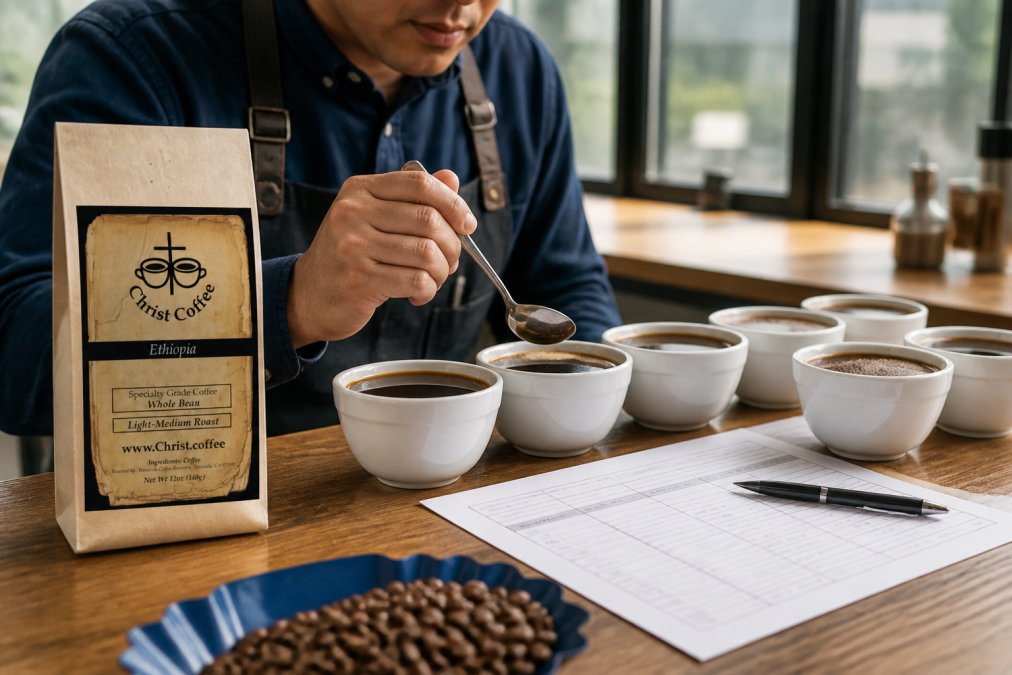
The process begins with roasting multiple samples identically to ensure consistency. After cooling, beans are ground to a specific particle size, finer than drip coffee but coarser than espresso. Hot water (around 200°F) is poured over the grounds in standardized white bowls, and the coffee steeps for four minutes. This controlled brewing allows the Q Grader to taste the coffee in its purest form.
After the initial steep, Q Graders "break the crust" by pushing grounds to the side and inhaling the aroma, detecting the coffee's most volatile compounds. Then comes the tasting phase: using a special cupping spoon, the Q Grader slurps coffee forcefully, aerating it across their palate to reveal the full flavor profile and detect subtle notes and defects. Throughout cupping, Q Graders reference a standard score sheet assessing whether the coffee has a "clean cup," identifying flavor descriptors, noting acidity level, and evaluating body and balance.
The beauty of cupping is its objectivity. Two Q Graders cupping the same coffee independently should arrive at similar scores because they're following the same protocol and evaluating against the same standards.
Difference Between Specialty and Commercial Coffee
Understanding what makes coffee specialty grade requires understanding what it's not. Commercial and specialty coffee occupy entirely different market segments with different supply chains, quality standards, and price points.
Defect Count and Quality Standards
The most concrete difference is defect tolerance. Specialty coffee allows zero full defects per 350-gram sample, meaning no black beans, moldy beans, broken beans, or stones (sca.coffee). Commercial coffee allows up to 30 full defects per 350 grams. This reflects the entire supply chain: specialty coffee producers invest in hand-sorting beans after harvest, while commercial producers rely on mechanical sorting. The result: specialty coffee tastes clean and bright; commercial coffee often carries off-flavors from defective beans.
Specialty coffee also demands uniformity in bean size, color, and moisture content, ensuring even roasting. Commercial coffee tolerates wider variation, contributing to inconsistent flavor.
Supply Chain Traceability
What makes coffee specialty grade includes knowing where it came from. Specialty coffee includes traceability information: country, region, farm or cooperative name, altitude, and processing method. A Q Grader evaluates specialty coffee knowing its origin, which informs expectations. Ethiopian coffee typically exhibits floral and fruity notes; Colombian coffee often shows balanced acidity with chocolate or nutty undertones.
Traceability also enables supply chain transparency that specialty coffee consumers increasingly demand. At Christ Coffee, we source from smallholder cooperatives, knowing exactly where beans come from.
Gourmet Coffee Beans: Single-Origin vs. Blends
What makes coffee specialty grade includes decisions about how beans are combined.
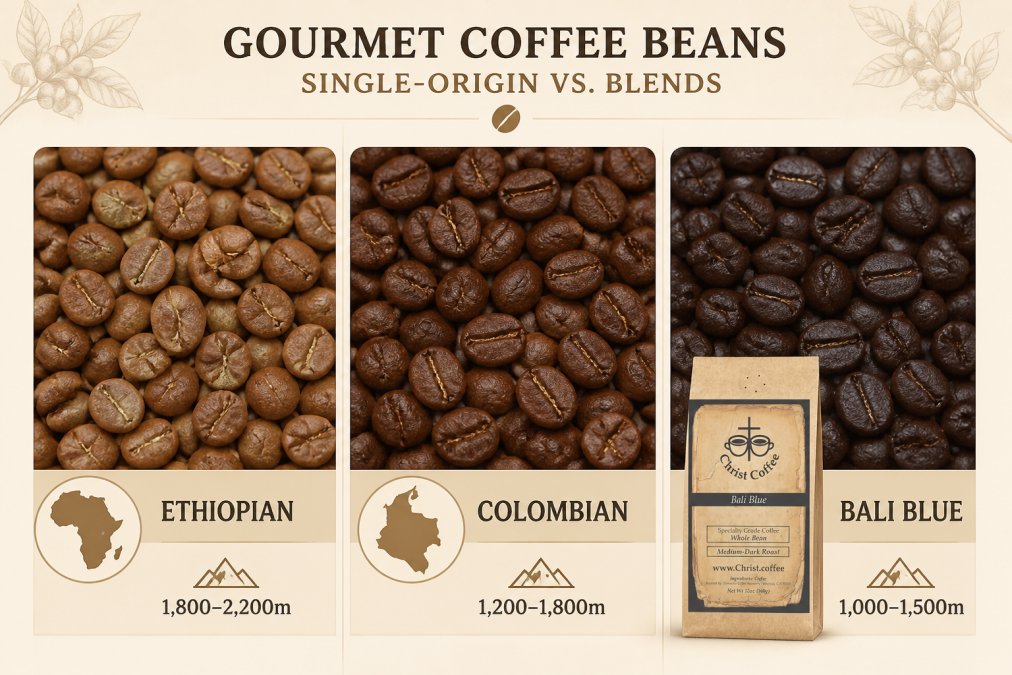
Single-origin coffee comes from one country, region, or farm, highlighting distinctive characteristics of specific terroir, the combination of altitude, climate, soil, and processing method that shapes flavor profile. Single-origin coffees typically score higher on the SCA scale because evaluation focuses on how well the coffee expresses its origin's characteristics. At Christ Coffee, our Ethiopia and Colombia single-origin options showcase these differences: the Ethiopia features bright, fruity notes typical of natural-processed East African coffees, while the Colombia exhibits balanced acidity and chocolate notes characteristic of washed Central American beans.


Blended coffees combine beans from multiple origins to create a specific flavor profile. A roaster might blend a bright, acidic Ethiopian with a full-bodied Sumatran to create complexity and balance. However, blending complicates specialty grading, as a blend's score is typically lower than its component single-origins. For home brewers, single-origin coffees offer clarity; blends offer consistency.
What Specialty Coffee Means for Farmers and the Environment
The economics of specialty coffee create incentives that benefit both farmers and ecosystems. Specialty coffee commands premium prices, often 2-3 times higher than commodity coffee, reaching farmers and incentivizing them to invest in quality (peer-reviewed research). A farmer earning specialty prices can afford to hand-select ripe cherries, invest in proper fermentation equipment, and maintain consistent quality.
This economic incentive drives environmental stewardship. Specialty coffee is often shade-grown, meaning coffee plants grow under native tree canopy rather than in monoculture plantings. Shade-grown coffee preserves forest habitat, maintains biodiversity, and sequesters more carbon than sun-grown coffee, while producing higher-quality beans.
The traceability that defines specialty coffee creates accountability. When a roaster knows exactly which farm produced their beans, they have incentive to ensure that farm operates sustainably. At Christ Coffee, we work directly with cooperatives, and our mission extends beyond great coffee, every purchase contributes to fighting child exploitation through organizations like Destiny Rescue and A21.
How to Identify Specialty Coffee at Home
You don't need a Q Grader's palate to recognize specialty coffee. Several practical markers help you identify what makes coffee specialty grade when shopping or brewing.
Look for the SCA score. Reputable specialty roasters display the score prominently. If a roaster claims specialty grade but doesn't list the score, ask for it. A score of 80-84 is solid specialty; 85+ is excellent; 90+ is exceptional.
Check the roast date, not the expiration date. Specialty coffee is roasted to order or in small batches. The bag should show a roast date within the past 2-3 weeks.
Examine the origin information. Specialty coffee includes specific details: country, region, farm or cooperative name, altitude, and processing method. "Ethiopian coffee" is vague; "Yirgacheffe region, Worka Kebele cooperative, natural process, 1,800-2,000 meters" is specialty.
Taste for clarity and complexity. Specialty coffee tastes clean with no off-flavors or bitterness from defects. You should taste distinct flavor notes beyond generic "coffee flavor."
Notice the price point. Specialty coffee typically costs $12-18 per pound for single-origin beans. Christ Coffee's single-origin options are priced at $29.99 per bag, reflecting quality, freshness (roasted to order), and mission impact.
Compare side-by-side. Brew a specialty coffee and a commercial coffee simultaneously. The difference is immediate: specialty coffee tastes brighter, more nuanced, and cleaner.
Understanding what makes coffee specialty grade transforms how you approach coffee shopping and brewing. The 80-point threshold, rigorous cupping process, defect standards, and traceability requirements all work together to ensure that specialty coffee delivers exceptional quality and meaningful impact.
When you choose specialty coffee, you're supporting a system where farmers earn fair prices, invest in quality, and often adopt sustainable practices. At Christ Coffee, every bag is roasted fresh to order and arrives within 5-7 days of roasting. Our single-origin options like Ethiopia, Colombia, and Bali Blue showcase what specialty coffee can taste like, and your purchase directly supports organizations fighting child exploitation. Shop our specialty-grade selection and experience the difference quality makes.

Frequently Asked Questions
Q: What qualifies as specialty coffee?
A: Specialty coffee is coffee that scores 80 points or higher on the Specialty Coffee Association's 100-point scale. It must meet rigorous standards for flavor profile, aroma, acidity, body, and sweetness, evaluated through standardized cupping by certified Q Graders. Specialty-grade beans demonstrate distinctive characteristics and clean cup quality, with minimal defects. This classification represents the highest grade of coffee and typically comes from single-origin sources with full supply chain traceability.
Q: How does the Specialty Coffee Association grade beans?
A: The Specialty Coffee Association uses Q Graders, trained and certified professionals, to evaluate coffee using a standardized 100-point scoring system. Graders assess aroma, flavor, acidity, body, sweetness, and uniformity through cupping, a sensory analysis process. Green coffee (unroasted beans) is scored before roasting to determine if it meets the 80-point threshold for specialty classification. The cupping process uses standardized equipment, score sheets, and protocols to ensure consistent, rigorous evaluation across all samples.
Q: What's the difference between specialty and commercial coffee?
A: Specialty coffee scores 80+ points and features distinctive characteristics, careful post-harvest processing, and traceable supply chains from specific farms or cooperatives. Commercial coffee scores below 80 points, comes from commodity markets with minimal traceability, and often blends beans from multiple unknown sources. Specialty beans have defect counts measured in single digits per 300-gram sample, while commercial coffee tolerates significantly higher defect counts. Specialty-grade coffee also commands premium pricing that often returns higher value to farmers.
Q: Does roast date affect specialty coffee classification?
A: Roast date doesn't determine specialty classification, but it significantly impacts freshness and flavor. Green coffee (unroasted beans) receives the specialty grade score before roasting. However, specialty coffee is typically roasted to order in small batches to preserve flavor complexity and ensure peak freshness. Coffee shipped 5-7 days after roasting, like Christ Coffee's made-to-order approach, delivers superior flavor compared to coffee roasted weeks or months prior, as the distinctive characteristics and flavor profile remain vibrant.
Q: What is the 15-15-15 rule for coffee?
A: The 15-15-15 rule is a guideline for coffee storage and freshness: coffee reaches its peak flavor window 15 days after roasting and remains optimal for approximately 15 days thereafter, meaning a 30-day window of best quality. After 15 days post-roast, flavor begins to fade as CO2 escapes and oxidation occurs. Specialty coffee roasted to order ensures you receive beans within this prime window, delivering the full flavor profile and distinctive characteristics that earned the specialty-grade classification.
Q: What makes gourmet coffee beans different from regular grocery store coffee?
A: Gourmet coffee beans meet specialty-grade standards through rigorous evaluation, traceability, and distinctive flavor profiles. They're sourced from specific origins or single-origin farms, processed using careful post-harvest methods, and scored by certified Q Graders at 80 points or higher. Regular grocery store coffee typically comes from commodity markets with unknown origins, higher defect counts, and minimal quality control. Gourmet beans deliver complex aroma, acidity, body, and sweetness that reflect their origin, while commercial coffee offers consistency but little distinctive character.
Q: How can I tell if coffee is actually specialty grade?
A: Look for these indicators: the bag lists the specific origin (farm, region, or cooperative name), includes a roast date, mentions Q Grader certification or Specialty Coffee Association standards, and states a cupping score or flavor notes. Specialty roasters typically provide supply chain transparency and post-harvest processing details. If a roaster roasts to order and ships quickly (within 5-7 days of roasting), it demonstrates commitment to freshness. Avoid coffee labeled only by country or with vague descriptions, specialty-grade beans always include detailed origin information.
Q: Why do specialty coffee farmers receive better prices?
A: Specialty-grade coffee commands premium prices because it meets rigorous quality standards verified through Q Grader cupping and Specialty Coffee Association protocols. Farmers who produce specialty-grade beans invest in careful harvesting, post-harvest processing, and traceability systems, all higher-cost practices. Direct relationships between roasters and specialty farmers bypass commodity market middlemen, allowing more of the purchase price to reach farmers. This economic model supports sustainable farming practices and fair compensation, creating incentive for farmers to prioritize quality over volume.
This article was written using GrandRanker