

Table of Contents
- Specialty Coffee vs Grocery Store Brands: What Sets Them Apart
- What Is Specialty Grade Coffee and How It Differs from Mass-Market
- The Roasting Process and Coffee Roast Date Importance
- Sourcing, Supply Chain, and Sustainability Differences
- Flavor Profile, Acidity, and Body: What You Actually Taste
- How to Store Coffee Beans for Freshness and Shelf Stability
- Price Comparison: Value-to-Quality Ratio and Hidden Costs
- Which Option Is Right for You: A Practical Decision Framework
Last Updated: August 19, 2026
Specialty Coffee vs Grocery Store Brands: What Sets Them Apart
Specialty coffee and grocery store brands are fundamentally different products. The gap isn't marketing hype, it's rooted in sourcing, roasting, freshness, and traceability. Specialty coffee costs more upfront, but the flavor profile, freshness window, and quality control justify the investment for serious home brewers.
The critical difference: specialty coffee is roasted in small batches after your order ships, while grocery store coffee sits on shelves for months. According to the Specialty Coffee Association's quality standards, specialty-grade beans score 80 points or higher on a 100-point cupping scale, a rigorous sensory evaluation measuring acidity, body, flavor notes, and balance.
Grocery store brands prioritize shelf stability and cost efficiency using commodity coffee, beans meeting minimum thresholds but lacking traceability and care. The result is a flatter, one-dimensional cup that works fine with milk and sugar but reveals nothing about origin or growing practices.
Christ Coffee represents the specialty end of this spectrum. Every bag is roasted fresh from real orders rather than warehouse stock and ships within days of roasting, ensuring peak flavor upon arrival. The brand ties each purchase to rescue-focused partners like Destiny Rescue and A21, turning your morning coffee into a direct contribution against child exploitation.
What Is Specialty Grade Coffee and How It Differs from Mass-Market
Specialty-grade coffee is defined by three things: traceability, quality standards, and sensory evaluation. Mass-market grocery store coffee skips all three.
Quality Standards and Grading
Specialty coffee must score 80 or higher on the Specialty Coffee Association's 100-point scale, evaluated across 10 factors: fragrance, aroma, uniformity, expansion, sweetness, acidity, body, flavor, aftertaste, and balance. A trained cupper tastes the coffee blind and scores each attribute.
Grocery store coffee has no such evaluation. It's commodity-grade, meeting basic thresholds, no mold, acceptable defect levels, consistent moisture, but with no cupping score, flavor analysis, or guarantee beyond baseline quality.
This matters because specialty roasters use cupping scores to make blending and roasting decisions, knowing exactly how acidic the coffee is and what flavor notes to highlight. Grocery store roasters roast to color standards without regard for the bean's individual potential.
Single-Origin vs Blended Commodity Coffee
Single-origin specialty coffee comes from a specific farm, region, or cooperative. You know where it grew, how it was processed, elevation, and harvest date. Ethiopia from Christ Coffee's lineup, for example, is shade-grown and handpicked by smallholder cooperatives using natural, eco-friendly methods.

Commodity coffee is blended from multiple origins and crops, often from five countries harvested in different years, roasted together to hit a price point. You can't trace it back to the grower, and there's no guarantee of fair trade, sustainable growing, or hand harvesting.
The Roasting Process and Coffee Roast Date Importance
The roast date is the single most important piece of information on any coffee bag. It tells you how fresh the coffee is and how much time remains before flavor degradation.
Specialty roasters print the roast date on every bag; grocery store brands rarely do. When it's missing, the coffee was typically roasted weeks or months ago.
Specialty roasters roast in small batches (25-50 pounds), allowing precise temperature control and roasting for specific bean characteristics. Light roasts bring out floral notes and acidity; dark roasts emphasize body and chocolate tones. Grocery store roasting is industrial, processing hundreds of pounds at once to a color standard rather than sensory target, sacrificing complexity for consistency.
Christ Coffee roasts from real orders, not warehouse stock. Your bag is roasted after you order and arrives at peak freshness, typically 5-7 days after roasting, when degassing is complete but oxidation hasn't begun.
Freshness and Peak Flavor Window
Coffee peaks 5-14 days after roasting. During this window, beans have finished degassing and flavor compounds are most vibrant. After 14 days, oxidation flattens the profile. By 30 days, the coffee is noticeably stale.
Grocery store coffee is typically 2-4 months old when purchased. It may taste fine, but flavor complexity is gone, you're tasting the roast technique, not the coffee itself.
Batch Size and Quality Control
Small-batch roasting allows real-time temperature and airflow adjustments. If a batch isn't developing correctly, the roaster can intervene. Large industrial batches offer no room for adjustment. Small batches also allow slight variation, which specialty roasters understand well enough to roast each to its potential.
Sourcing, Supply Chain, and Sustainability Differences
Specialty roasters invest in relationships with growers. Grocery store brands buy from commodity brokers pooling beans from hundreds of farms.
Direct Trade and Traceability
Specialty coffee often comes through direct-trade relationships, where roasters buy directly from farmers or cooperatives, paying premiums above commodity prices. Fair-trade certification is another model, ensuring minimum prices and labor standards, though less direct than direct-trade relationships.
Grocery store coffee uses commodity channels where brokers pool beans from multiple farms and sell to roasters who've never met the grower. There's no relationship, no premium for quality, and no incentive for improvement.
The Fair Trade USA certification standards outline labor practices and environmental requirements. Specialty roasters often exceed these standards through direct relationships and premiums beyond fair-trade minimums.
Hand-Picked vs Machine-Harvested Beans
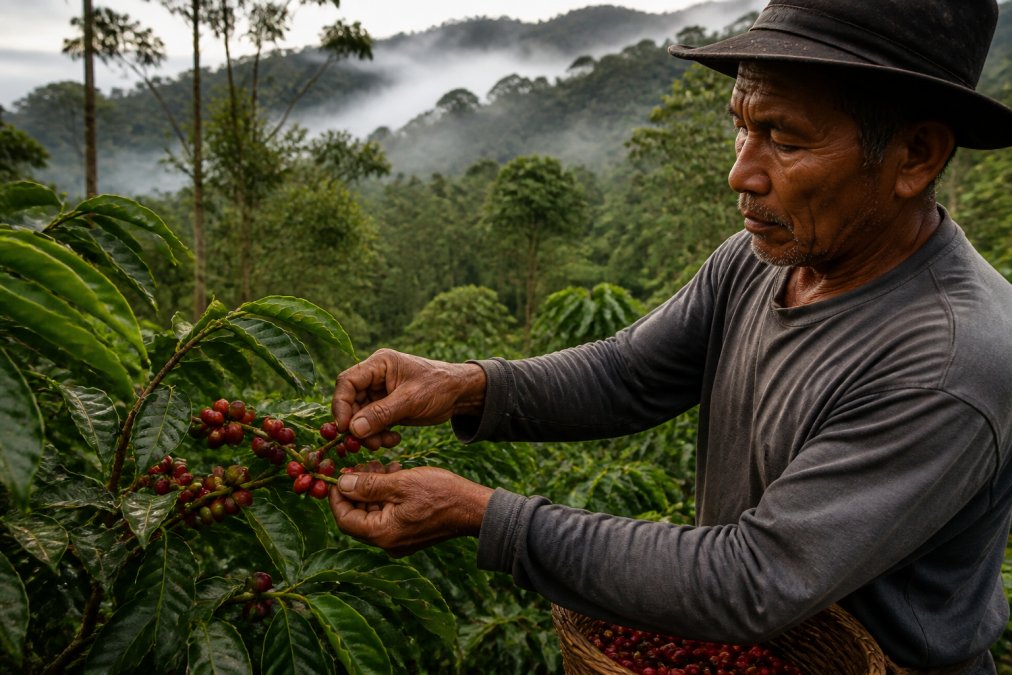
Hand-picking allows selective harvesting of only ripe cherries, resulting in higher quality and fewer defects. Machine harvesting strips all cherries from branches, requiring sorting to remove unripe and damaged beans.
Specialty coffee is almost always hand-picked. The cost is higher, but quality is significantly better. Grocery store coffee often uses machine-harvested beans for cost savings. Hand-picking also supports farming communities better than machine harvesting.
Flavor Profile, Acidity, and Body: What You Actually Taste
Specialty-grade beans have distinct flavor notes brought out by roasting. Ethiopia from Christ Coffee, for example, offers bright acidity, creamy body, and naturally sweet notes of molasses, cardamom, and floral undertones.
Acidity in specialty coffee indicates brightness and complexity, often marking lighter roasts and higher-elevation beans. Body refers to palate weight: light, medium, or full. Grocery store coffee has a flatter profile where you taste the roast more than the coffee itself.
This matters for brewing. Specialty coffee's flavor notes guide your method, light, fruity coffee shines in pour-over or AeroPress; full-bodied coffee works better in espresso machines or French press. Grocery store coffee works with any method because there's little flavor to extract.
How to Store Coffee Beans for Freshness and Shelf Stability
Storage determines how long freshness lasts. Once opened, oxidation accelerates. Proper storage extends the peak flavor window.
Store beans in an airtight container away from direct sunlight and heat. A cool, dark cupboard is ideal. The freezer damages beans through moisture condensation.
Packaging Technology and Valve-Sealed Bags
Specialty roasters use valve-sealed bags allowing CO2 escape after roasting while preventing air entry. This keeps coffee fresh longer and is why roast dates matter, the bag protects the coffee once sealed.
Grocery store bags often lack valves or use cheaper sealing methods, sometimes just folded and stapled.
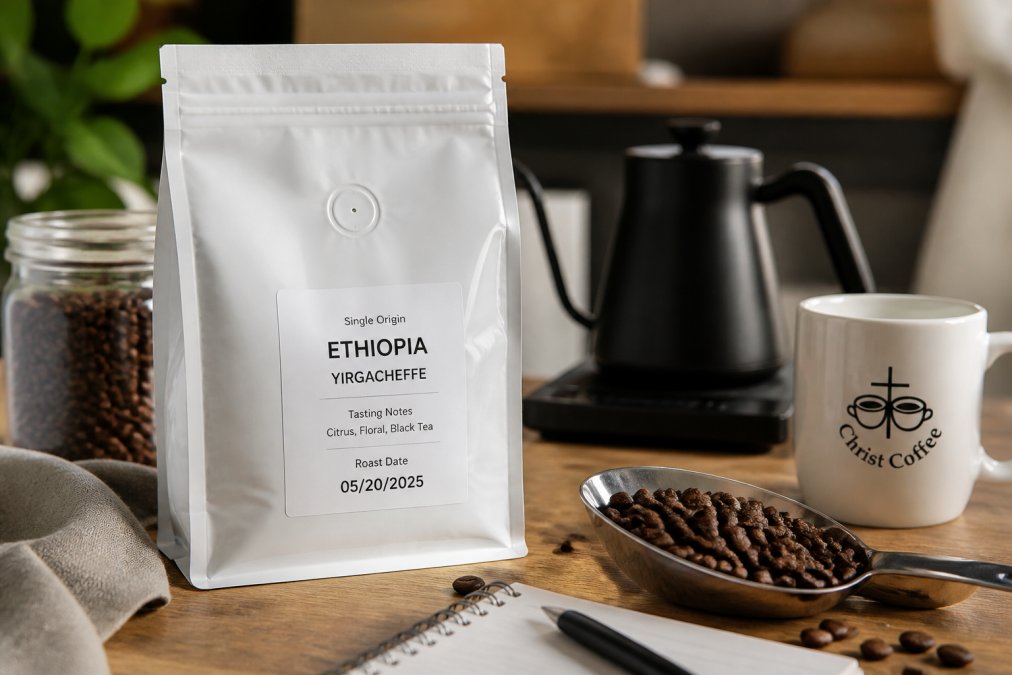
Once opened, transfer beans to an airtight container and use within 2-3 weeks for best flavor. Whole beans last longer than ground coffee because grinding increases surface area and accelerates oxidation. Specialty roasters often sell whole beans only, forcing fresh grinding. Grocery store brands sell pre-ground coffee, which is convenient but stale by brewing time.
Price Comparison: Value-to-Quality Ratio and Hidden Costs
Specialty coffee costs more per bag, but value depends on how you measure it.
Specialty Coffee Pricing Breakdown
Christ Coffee's single-origin coffees cost $29.99 per 12-ounce bag, or about $25 per bag in bundles. At a standard pour-over dose of 0.5 ounces per cup, that's roughly $0.32 per cup, or $10 monthly for daily brewing.
Every order includes a $5 shipping charge, and 100% goes to rescue-focused partners like Destiny Rescue and A21. Orders over $65 trigger double donation impact. You're funding anti-trafficking work alongside buying coffee.
Grocery Store Coffee Economics
Typical grocery store bags cost $8-12 for 12 ounces, roughly $0.12-0.15 per cup or $3-5 monthly for daily brewing. The math favors grocery store coffee until you factor in freshness. A grocery store bag is often 2-4 months old, meaning you're paying for stale coffee with flat flavor and no complexity.
Specialty coffee costs more per cup but delivers peak flavor, full complexity, and assurance of fresh roasting. You're also supporting specific farms and anti-trafficking organizations.
| Comparison Factor | Specialty Coffee (Christ Coffee) | Grocery Store Brands |
|---|---|---|
| Price per 12oz bag | $29.99 | $8-12 |
| Cost per cup (daily brewing) | ~$0.32 | ~$0.12-0.15 |
| Roast date transparency | Yes, printed on bag | Rarely provided |
| Freshness at purchase | 5-7 days post-roast | 2-4 months old |
| Flavor complexity | High (distinct origin notes) | Low (flat, roast-forward) |
| Supply chain traceability | Direct or fair-trade verified | Commodity, unknown origin |
| Harvesting method | Hand-picked (selective) | Machine-harvested (bulk) |
| Sustainability practices | Documented, mission-aligned | Minimal transparency |
| Packaging technology | Valve-sealed, oxygen barrier | Standard, variable quality |
| Additional impact | 100% of $5 shipping supports rescue work | No social mission |
Which Option Is Right for You: A Practical Decision Framework
The choice depends on what you value and how you brew.
Choose specialty coffee if: You brew daily and care about flavor complexity. You have a grinder and brewing method. You want to know your coffee's origin. You're willing to pay more for freshness and quality. You want your morning routine aligned with your values, like supporting anti-trafficking organizations.
Christ Coffee fits this profile. The brand roasts to order, ships within days, and ties every purchase to rescue-focused partners. For home baristas or serious coffee drinkers, this is the right choice.
Choose grocery store coffee if: You drink occasionally, not daily. You add milk and sugar without tasting subtleties. You want the lowest price and don't care about freshness or origin. You prefer convenience over quality and aren't concerned with supply chain transparency.
Grocery store coffee is fine for this use case, consistent, available, and cheap.
The middle ground: If you like good coffee but don't want to spend $0.32 per cup, consider mid-tier or local roasters that are fresher than grocery store coffee but cheaper than premium specialty brands.
If you're reading this, you're likely in the specialty coffee camp already. You're curious about roast dates, origin, and flavor notes. The question isn't whether specialty coffee is worth it, but whether you're ready to commit to grinding fresh, brewing intentionally, and paying for quality.
Christ Coffee removes this friction. The brand handles roasting, sourcing, and shipping. You handle brewing. The coffee arrives fresh, flavor is there to discover, and your purchase funds meaningful work.
If you're serious about your morning coffee ritual, specialty-grade coffee from Christ Coffee delivers both the flavor complexity you're looking for and the mission alignment you value. The brand's roast-to-order model ensures peak freshness, and every purchase, including the $5 shipping charge, supports organizations fighting child exploitation. Start with the Colombia single origin or explore the Single Origin Saving Blend Bundle to taste the difference freshness and traceability make.


Frequently Asked Questions
What is the difference between specialty coffee and grocery store coffee?
Specialty coffee is graded and scored by certified cuppers using strict quality standards, typically scoring 80+ points. Grocery store brands are commodity coffee, often blended from lower-grade beans sourced for cost and shelf stability rather than flavor. Specialty coffee emphasizes single-origin traceability, freshness (roasted within days), and distinct flavor profiles. Grocery store coffee prioritizes long shelf life and consistent availability, sacrificing the nuanced acidity, body, and notes that define specialty-grade beans.
How important is the coffee roast date for quality and taste?
Roast date is critical. Specialty coffee peaks in flavor 5-14 days after roasting, then gradually loses brightness and complexity as oils oxidize and CO2 degasses. Grocery store bags rarely display roast dates; many sit in warehouses for months before reaching shelves, resulting in flat, stale flavors. Specialty roasters like Christ Coffee roast to order and ship within days, ensuring you receive beans at peak freshness. Checking the roast date is one of the fastest ways to identify genuine specialty coffee.
Why does specialty coffee cost more than supermarket brands?
Specialty coffee costs more due to multiple factors: higher-quality bean selection (single-origin, hand-picked harvests), direct trade relationships that pay farmers fairly, small-batch roasting with strict quality control, and rapid shipping to preserve freshness. Grocery store coffee uses commodity beans, bulk roasting, and extended warehousing, which reduces costs but sacrifices flavor and freshness. The price difference reflects the actual quality difference: specialty coffee delivers complex flavor profiles and superior sensory experience that justify the investment for serious home brewers.
Is specialty coffee healthier than grocery store coffee?
Both contain similar caffeine levels and antioxidants. The health distinction lies in processing and storage. Specialty coffee, roasted fresh and stored properly, retains more polyphenols and maintains chemical stability better than grocery store coffee, which oxidizes over months on shelves. Specialty coffee typically uses organic, pesticide-free beans from certified farms, while commodity coffee may contain residual pesticides. For most drinkers, the real benefit is flavor satisfaction and the ability to enjoy coffee without additives or excessive sweetening, supporting healthier consumption habits.
How can you tell if coffee beans are specialty grade?
Look for these markers: a visible roast date (not just a 'best by' date), cupping score or quality rating, single-origin or named blend designation, and traceability information (farm, region, processing method). Specialty coffee bags typically cost $25-35 per pound and come from roasters who educate consumers about flavor profiles and brewing methods. Grocery store bags rarely display this information. Check the packaging for terms like 'shade-grown,' 'hand-picked,' 'direct trade,' or 'organic certification.' Christ Coffee's single-origin offerings, for example, specify flavor notes, acidity levels, and sourcing details on every bag.
This article was written using GrandRanker