

Table of Contents
- Why Freshness Matters for Your Coffee
- Check the Roast Date First
- How Long Does Coffee Stay Fresh
- Sensory Tests: Smell, Look, and Taste
- Signs of Stale Coffee Beans
- How to Store Coffee Beans for Maximum Freshness
- Troubleshooting False Stale Brews
- Conclusion
Last Updated: August 17, 2026
Why Freshness Matters for Your Coffee
Fresh coffee tastes dramatically different from stale coffee, the gap between a vibrant, nuanced cup and a hollow, dull one. When you understand how to tell if coffee is fresh, you unlock the full potential of specialty-grade beans.
Coffee begins degrading the moment it's roasted. The beans release carbon dioxide through degassing, which continues for days. During this window, the coffee develops its most complex flavors. After that window closes, oxidation accelerates. The oils turn rancid, bright acidity flattens into bitterness, and premium beans become indistinguishable from grocery store coffee.
This guide covers practical methods to assess freshness, from checking the roast date to running sensory tests that reveal whether your beans are still in their prime.
Check the Roast Date First
The roast date is your single best tool for assessing freshness. Unlike vague "best by" dates, it tells you exactly when the beans were roasted, and from that point, you can calculate how old they are.
Look for a printed date on the bag. Quality roasters display this prominently on the front or back. The format varies: some use MM/DD, others spell out the month, and specialty roasters sometimes use Julian dates. Regardless of format, this number matters more than anything else on the package.
The roast date is objective. Everything else, aroma, appearance, taste, involves subjective interpretation. A bag roasted two weeks ago is fresher than one roasted three months ago, period.
Many commercial coffee brands don't print roast dates at all, instead printing "best by" dates months after the actual roast. This obscures how old the coffee truly is. If you can't find a roast date, move on to another brand. Transparency about roast dates signals a roaster that cares about freshness.
How Long Does Coffee Stay Fresh
Coffee freshness follows a predictable timeline:
Peak freshness window: 2-4 weeks after roasting. The degassing process completes, and the flavor profile reaches its most balanced state. The coffee tastes vibrant, with clear acidity and complex notes.
Acceptable window: 4-8 weeks after roasting. The coffee is still good, though aroma begins to fade slightly and flavor becomes less nuanced.
Declining quality: 8-12 weeks after roasting. The coffee is drinkable but noticeably past its prime. Acidity flattens, bitterness emerges, and aroma is faint.
Stale: Beyond 12 weeks. The beans have lost most character. Oxidation has progressed significantly, and flavor is flat and hollow.
These timelines assume proper storage. Exposure to light, heat, air, or moisture accelerates decline at every stage. Ground coffee degrades much faster than whole beans. Once ground, coffee reaches the stale stage in 1-2 weeks, even with proper storage. Grind only what you need immediately before brewing.
Sensory Tests: Smell, Look, and Taste
Once you know the roast date, sensory evaluation confirms what the timeline suggests.
The Aroma Test
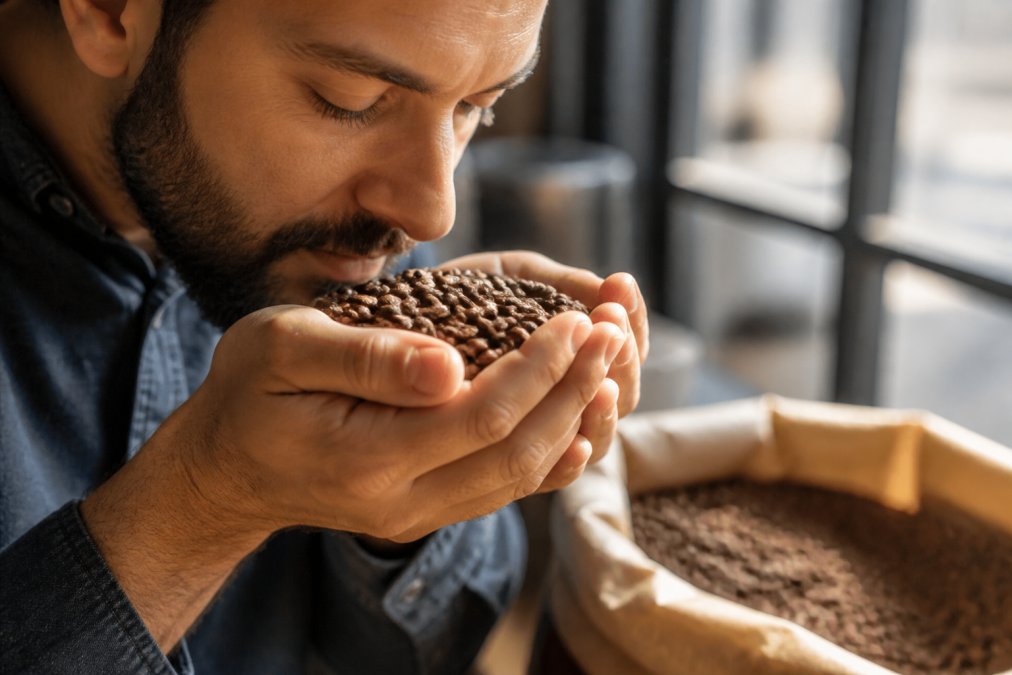
Fresh coffee beans smell vibrant and complex. Open a bag and bring it close to your nose. You should detect a rich, multi-layered aroma, perhaps notes of chocolate, fruit, nuts, or flowers depending on origin and roast profile.
Stale beans smell flat and dull. The aroma is faint or absent, sometimes musty or cardboard-like. If you have to sniff hard to detect anything, freshness has declined significantly. Fresh beans smell alive; stale beans smell tired.
The Visual Inspection
Fresh beans are shiny with visible oils on the surface. The color is vibrant and uniform, ranging from medium to dark brown depending on roast level. The surface has a slight sheen.
Stale beans look dull and matte. The surface appears dry, the color may look faded or uneven, and some beans might show a slight whitish coating indicating advanced oxidation.
Very light roasts may appear less oily than darker roasts even when fresh, this is normal. Focus on the overall vibrancy of the color rather than oil content alone.
The Taste Profile Test
Brew your coffee using your normal method and pay attention to three elements: acidity, flavor clarity, and aftertaste.
Fresh coffee tastes bright and clean. The acidity is present and pleasant. Flavors are clear and distinct. The aftertaste is clean and doesn't linger unpleasantly.
Stale coffee tastes flat and hollow. Acidity is gone or muted, flavors blur together or taste dull, and bitterness may emerge. The aftertaste is often unpleasant and lingers.
Taste fresh and stale side by side. The contrast becomes unmistakable.
Signs of Stale Coffee Beans
Stale coffee shows consistent warning signs:
Rancid smell: Musty, cardboard-like, or slightly off odors indicate staleness. Fresh beans never smell unpleasant.
Dull appearance: Matte, lifeless beans rather than glossy and vibrant ones have lost freshness.
Flat aroma: Opening the bag produces little to no smell. Fresh beans announce themselves immediately.
Hollow or bitter taste: The coffee tastes thin and unpleasant, with bitterness dominating without accompanying complexity.
Weak extraction: Even with proper technique, the coffee tastes weak or under-developed.
No crema (espresso): Stale beans produce little to no crema. Fresh beans create a thick, golden layer.
Any of these signs suggest the beans have passed their prime.
How to Store Coffee Beans for Maximum Freshness
Storage directly determines how long your coffee stays fresh. Coffee's enemies are light, heat, air, and moisture.
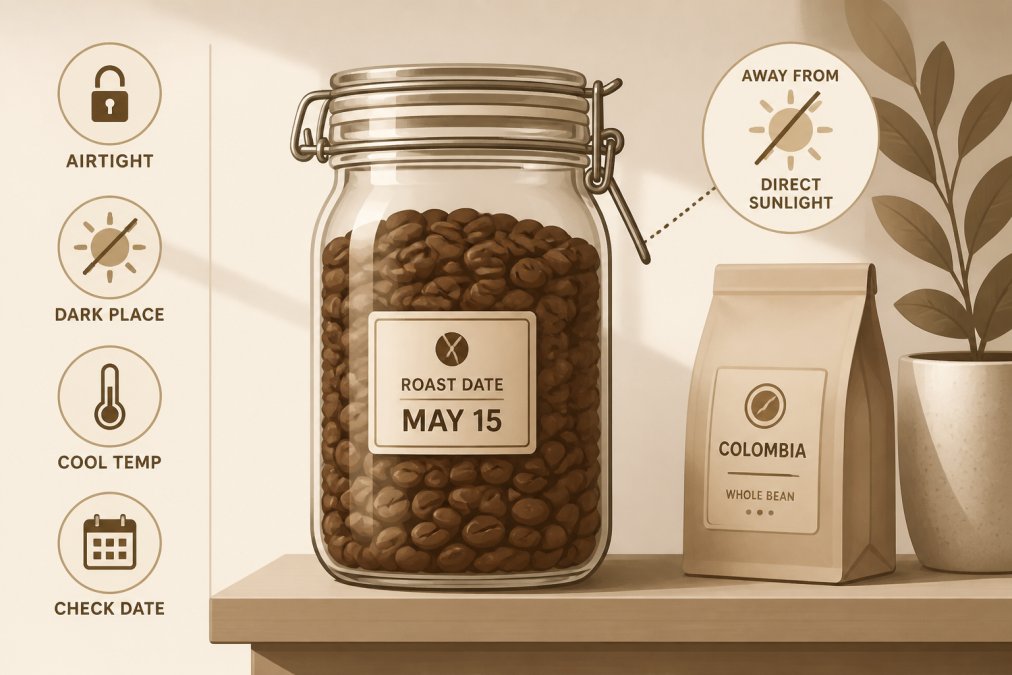
Use an airtight container, glass or opaque plastic work well. Avoid clear containers that expose beans to light. The container should seal tightly; oxygen is the primary culprit in oxidation.
Store the container in a cool, dark place. A pantry or cabinet works perfectly. Room temperature (around 70°F) is ideal. Avoid areas near the stove, oven, or sunny windows. Heat accelerates oxidation dramatically.
Keep the container away from moisture. A kitchen counter near the sink or humid bathroom is problematic.
For unopened bags, store them in the same conditions. Once opened, transfer beans to an airtight container immediately.
Freezer and Fridge Storage Myths
Freezing is counterproductive. When beans freeze, moisture condenses on the surface as they thaw, damaging the beans and introducing unwanted flavors. Refrigeration is similarly problematic, refrigerators are humid environments, and every time you open the door, moisture condenses on the cold beans.
The best storage remains simple: a cool, dark, dry, airtight container at room temperature.
Ground vs. Whole Bean Decay Rates
Whole beans have minimal surface area exposed to oxygen. Under proper storage, they stay fresh for 8-12 weeks or longer.
Ground coffee has vastly more surface area. Grinding exposes the interior of each bean to oxygen, accelerating oxidation exponentially. Ground coffee reaches the stale stage in 1-2 weeks, even with airtight storage.
Buy whole beans and grind them immediately before brewing. This preserves freshness far longer than buying pre-ground coffee.
Troubleshooting False Stale Brews
Sometimes coffee tastes stale even though the roast date indicates freshness. This usually means the problem isn't the beans, it's the brewing.
Under-extraction: If you brew too quickly or use water that's too cool, you extract insufficient flavor. The fix is to use hotter water (195-205°F) and ensure proper contact time.
Over-extraction: If you brew too long or use water that's too hot, you extract bitter compounds that mask natural flavors. Use proper brewing time and temperature for your method.
Water quality: Poor water quality affects flavor dramatically. If your tap water tastes bad, your coffee will too. Consider using filtered water.
Stale brewing equipment: Coffee residue in your grinder, brewer, or cup can contaminate fresh coffee. Clean your equipment thoroughly.
Wrong brewing method for the beans: Some brewing methods highlight freshness better than others. Experiment with different approaches.
To confirm the beans are actually fresh, compare them to beans you know are fresh. Brew both using the same method, water, and technique. If the known-fresh beans taste noticeably better, your storage or brewing is the issue.
Understanding how to tell if coffee is fresh transforms your daily brew. The roast date is your starting point, the most reliable indicator of where the beans are in their lifecycle. Sensory tests confirm what the timeline suggests. Proper storage extends freshness for weeks. When you recognize the signs of staleness, you know when to move on to fresher beans.
Christ Coffee addresses the freshness challenge directly by roasting to order and shipping within days of roasting. Beans arrive at their peak, typically 5-7 days after roast, giving you a full window to enjoy them at their best. The satisfaction guarantee means if your beans don't meet freshness expectations, Christ Coffee replaces them. For coffee enthusiasts who prioritize freshness and quality, this model delivers both.
Frequently Asked Questions
How long does coffee stay fresh after roasting?
Whole beans remain at peak freshness for 2-4 weeks after roasting, though they can stay drinkable for up to 8 weeks. Ground coffee degrades faster, staying fresh for 1-2 weeks. Freshness depends on storage conditions, roast date visibility on the bag, and how quickly carbon dioxide (CO2) escapes during the degassing process. Always check the roast date on your bag to know exactly how old your coffee is.
What are the signs of stale coffee beans?
Stale beans lack vibrant aroma and smell flat or dull instead of fragrant. Visually, they appear darker or duller in color. When brewed, stale coffee tastes hollow, bitter, or muted rather than showing balanced acidity and a complex flavor profile. You may also notice a lack of crema on espresso or weak extraction. These signs indicate oxidation and loss of volatile flavor compounds over time.
Should I freeze or refrigerate my coffee beans?
Freezing and refrigeration are not recommended. Moisture and temperature fluctuations from freezing damage bean structure and accelerate oxidation. Instead, store beans in an airtight container at room temperature, away from light and heat. The one-way valve on specialty coffee bags (like those from Christ Coffee) allows CO2 to escape while preventing air from entering, maintaining freshness far better than freezer storage.
How does water quality affect whether my coffee tastes fresh?
Water quality directly impacts extraction and flavor perception. Hard water or heavily chlorinated water can mask the vibrant, complex flavor profile of fresh beans, making excellent coffee taste flat or bitter. Use filtered water for brewing to ensure proper extraction of the coffee's natural acidity and aromatic compounds. Poor water quality won't make fresh beans taste stale, but it will prevent you from tasting their true character.
This article was written using GrandRanker