

Table of Contents
- Why Ethical Coffee Brands Matter in the Fight Against Human Trafficking
- Fair Trade Coffee Certifications: What They Actually Mean
- How to Identify Ethically Sourced Coffee: A Buyer's Framework
- Coffee Supply Chain Transparency: Tracing Your Cup from Farm to Home
- Leading Ethical Coffee Brands and Their Anti-Trafficking Impact
- How to Verify a Brand's Ethical Claims and Prevent Greenwashing
- Taking Action: Steps to Support Ethical Coffee Brands
- Conclusion
Last Updated: August 15, 2026
Why Ethical Coffee Brands Matter in the Fight Against Human Trafficking
The coffee industry generates over $100 billion annually, yet many farms operate in regions where human trafficking and labor exploitation are systemic. When you choose ethical coffee brands, you're directing money toward rescue efforts rather than perpetuating harm. Christ Coffee and other mission-driven roasters have built their business models around this principle: every purchase becomes a tool for fighting human trafficking and supporting survivors.
Smallholder farmers in vulnerable regions face pressure from commodity markets that push prices down, creating desperation that traffickers exploit. Supply chain transparency reveals these patterns, but only when brands commit to tracking beans from specific farms to your cup.
This guide explores how ethical coffee brands reshape the industry, examining fair trade certifications, showing you how to identify genuinely sourced coffee, and introducing roasters who've made anti-trafficking work central to their mission.
Fair Trade Coffee Certifications: What They Actually Mean
Fair trade certification requires farmers to receive fair prices and workers to be protected, but the reality is more nuanced. Fair trade certifications vary in rigor, and the label alone doesn't guarantee that forced labor or trafficking hasn't occurred somewhere in the supply chain.
Fair Trade Certified requires participating farms to meet labor standards, environmental practices, and pricing minimums, though legal minimums in some nations don't constitute living wages. Rainforest Alliance takes a broader sustainability approach, covering environmental stewardship alongside labor practices and explicitly addressing child labor and forced labor. Direct Trade operates differently, it's not a formal certification but a sourcing philosophy where roasters establish direct relationships with specific farms. When a roaster visits farms, knows farmers by name, and pays premiums directly, the incentive to hide labor exploitation diminishes. However, direct trade lacks third-party auditing, so it depends on the roaster's integrity.
A farm can be fair trade certified and still employ workers under coercive conditions if those conditions aren't detected during audits. This is why ethical coffee brands increasingly layer certifications with direct relationships, transparency reports, and partnerships with organizations specializing in identifying modern slavery.
How to Identify Ethically Sourced Coffee: A Buyer's Framework
Identifying genuinely ethical coffee requires moving beyond label reading.
Step 1: Check for Multiple Verification Layers
Does this brand rely on a single certification, or do they layer multiple verification methods? Brands combining fair trade certification with direct trade relationships, third-party auditing beyond standard certification, and published supply chain transparency reports take a more comprehensive approach to human rights due diligence.
Step 2: Look for Specific Farm and Farmer Information
Legitimate ethical brands can name which farms their coffee comes from, including regions and often photos of farmers or cooperatives. If a brand describes coffee as "ethically sourced" but can't name farms or farmers, that's a red flag.
Step 3: Investigate Traceability Documentation
Ask for supply chain transparency. Ethical brands publish documentation showing the path from farm to roastery, including harvest dates, lot numbers, certifications, and information about intermediaries.
Step 4: Verify Partnership with Anti-Trafficking Organizations
Brands serious about fighting human trafficking often partner with organizations specializing in this work. Christ Coffee directs a portion of sales to partners like Destiny Rescue and A21, organizations with expertise in identifying and supporting trafficking survivors.
Step 5: Review Third-Party Audit Results
Some brands commission independent audits specifically focused on labor practices and human trafficking risk. The existence of these audits and willingness to share results publicly signals genuine commitment.
Step 6: Assess Pricing and Farmer Compensation
Ethical coffee costs more because brands pay farmers significantly above commodity prices, invest in direct relationships, and fund community development. If a brand claims to be ethical but prices identically to conventional coffee, their cost structure doesn't support those practices.
| Verification Method | What It Reveals | Strength | Limitation |
|---|---|---|---|
| Fair Trade Certification | Labor standards compliance, environmental practices | Third-party auditing, established standards | Audits occur on schedule, not continuously |
| Direct Trade Relationships | Farm-level transparency, farmer relationships | Creates accountability through personal connection | Depends on roaster's integrity; no formal audit |
| Supply Chain Documentation | Path from farm to roastery, lot traceability | Makes concealment harder | Requires brand to publish; not all do |
| Anti-Trafficking Partnerships | Organizational commitment to rescue work | Demonstrates values beyond marketing | Doesn't audit farms; supports survivors |
| Independent Audits | Labor practices, trafficking risk assessment | Specific focus on human rights | Costly; not all brands commission them |
Coffee Supply Chain Transparency: Tracing Your Cup from Farm to Home
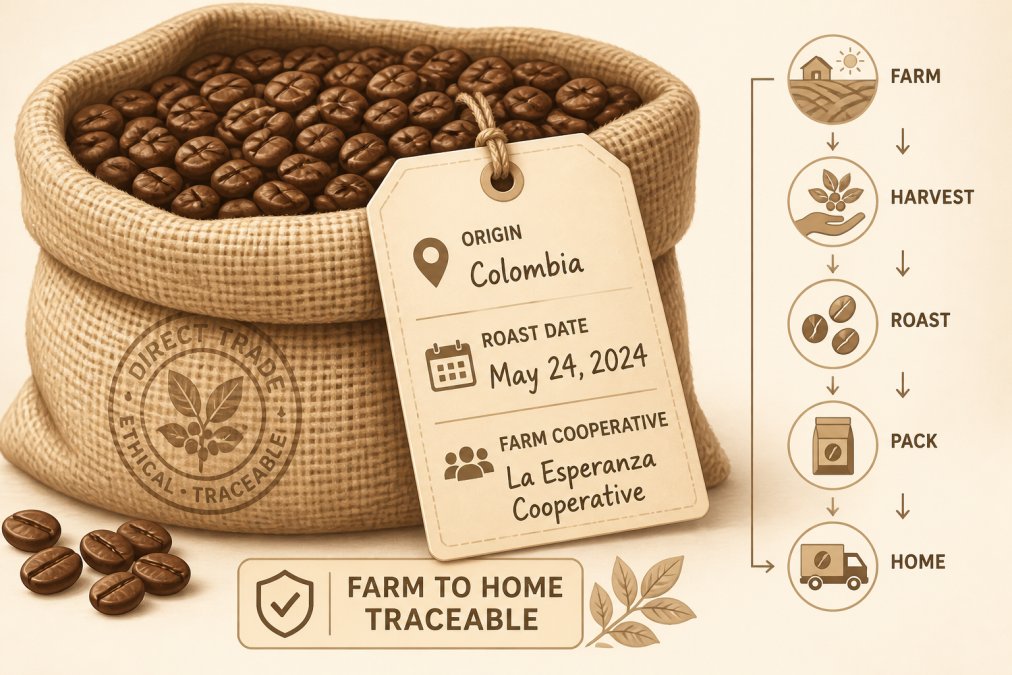
Supply chain transparency creates accountability at every step, and accountability deters exploitation. A transparent supply chain begins with the farm identified by name and region. Ethical brands share information about farm size, farming methods, and the cooperative or farmer group involved.
From the farm, coffee moves through intermediaries, a local processor, regional exporter. Transparent supply chains document these steps. At the roastery, ethical brands roast to order rather than stockpiling pre-roasted inventory. Christ Coffee uses this practice, ensuring freshness while creating accountability, each batch ties to specific customer orders, making it easier to track origin and destination.
The most transparent brands publish this entire journey, creating batch-specific documentation, publishing farm visit photos, sharing farmer stories, and sometimes including QR codes on packaging that let you trace that specific bag to its origin.
Leading Ethical Coffee Brands and Their Anti-Trafficking Impact
When evaluating ethical coffee brands, look for roasters who've made fighting human trafficking central to their mission.
Christ Coffee: Direct Donation Model with Mission-Driven Roasting
Christ Coffee operates on a model where every purchase directly funds anti-trafficking work. One hundred percent of the $5 standard shipping charge goes to rescue-focused partners like Destiny Rescue and A21. Orders over $65 trigger a double donation, meaning customers who buy bundles contribute more to organizations actively rescuing people from trafficking.
Christ Coffee roasts from real orders, not warehouse stock. Each bag ties to a customer, creating accountability and ensuring freshness. The brand offers three product bundles: the Premium Rescue Blend Bundle ($66.29), the Single Origin Saving Blend Bundle ($76.49), and the Flavored Freedom Blend Bundle ($66.29), each delivering specialty-grade coffee while maximizing donation impact.

What distinguishes Christ Coffee is transparency about where donations go. The brand partners with named organizations: Destiny Rescue specializes in identifying and rescuing trafficking survivors; A21 combines rescue operations with survivor aftercare; Love146 focuses on child trafficking prevention; the Tim Tebow Foundation funds youth empowerment.
Direct Trade and Smallholder Farmer Partnerships
Direct trade roasters build relationships with specific farmer cooperatives and smallholder farmers, paying premiums far exceeding commodity prices. When a roaster establishes direct relationships, they visit farms, know farmers by name, and understand local conditions firsthand. This visibility makes it harder for labor exploitation to persist undetected.
Direct trade also addresses a root cause of trafficking: economic desperation. By paying farmers well above commodity prices and committing to multi-year purchasing agreements, roasters create stability. Some direct trade roasters fund community development projects, schools, healthcare, water systems, that address conditions traffickers exploit.
The limitation is that direct trade lacks formal third-party auditing and depends entirely on the roaster's integrity. The most credible direct trade brands layer their model with certifications, published documentation, and partnerships with anti-trafficking organizations providing external accountability.
Third-Party Auditing and Verification Standards
Third-party audits specifically focused on human rights due diligence identify trafficking risk factors that general sustainability audits miss. These audits examine labor practices in detail: wage records, worker interviews conducted privately, freedom of movement, debt arrangements, and housing conditions.
Comprehensive audits are expensive, and many small farms can't afford them. Ethical brands sometimes commission audits on behalf of supplier farms, absorbing the cost as part of their commitment to transparency. Brands willing to share audit findings demonstrate confidence in their supply chains and commitment to continuous improvement.
How to Verify a Brand's Ethical Claims and Prevent Greenwashing
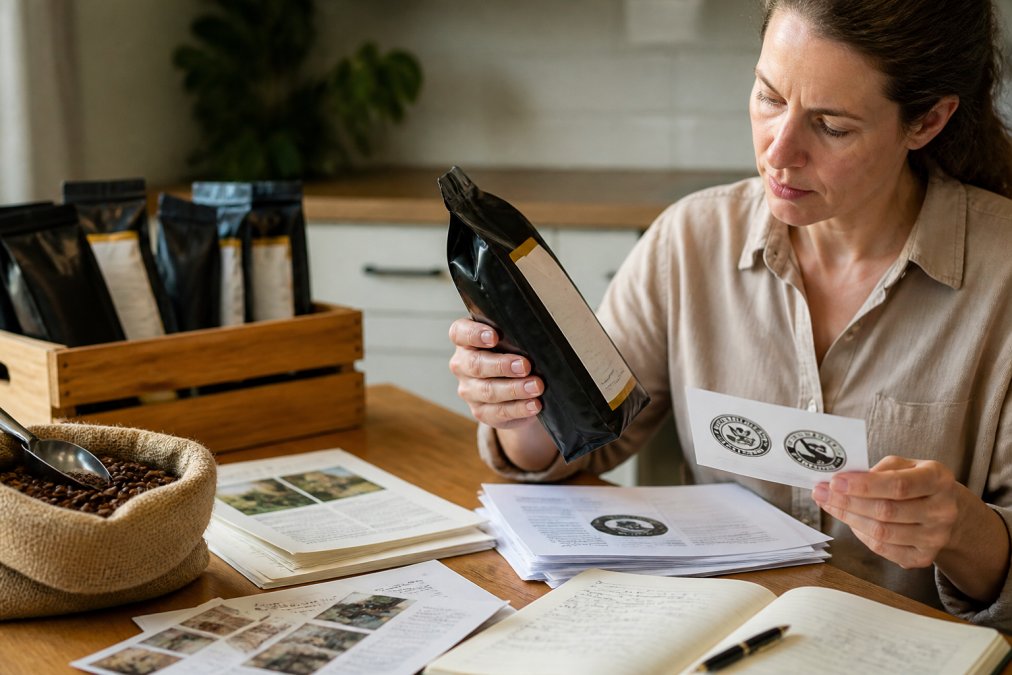
Greenwashing means using ethical language and imagery to market coffee that doesn't actually meet high standards.
Red Flag 1: Vague Sourcing Language
If a brand describes coffee as "ethically sourced" without naming farms, farmers, or cooperatives, that's a warning sign.
Red Flag 2: Single Certification Reliance
A brand displaying only a fair trade logo, with no additional verification, may be doing the minimum. Genuine ethical brands layer certifications with direct relationships, transparency reports, and anti-trafficking partnerships.
Red Flag 3: No Documented Anti-Trafficking Work
If a brand claims to care about human trafficking but can't name supporting organizations or show how donations are used, that's greenwashing.
Red Flag 4: Pricing That Doesn't Match Claims
Ethical coffee costs more because farmers are paid more, supply chains are audited, and organizations are funded. If a brand claims to be ethical but prices at commodity levels, their cost structure doesn't support those claims.
Red Flag 5: No Supply Chain Documentation
Ask for a supply chain transparency report. Ethical brands publish farm names, certifications, audit results, and donation recipients.
Verification Step 1: Check Partner Organizations Independently
Visit the partner organization's website directly. Look for annual reports, financial disclosures, and descriptions of operations. Verify the partnership by checking whether the brand appears in the organization's donor lists or impact reports.
Verification Step 2: Research Certifications
Visit the certification body's website and search for the specific farms or roasters the brand claims to work with.
Verification Step 3: Request Detailed Documentation
Email the brand and ask for farm names and locations, certification numbers, audit results, and documentation of donations to anti-trafficking partners.
Verification Step 4: Look for Third-Party Reviews
Check independent review sites and nonprofit evaluations monitoring ethical claims in the coffee industry.
Taking Action: Steps to Support Ethical Coffee Brands
Understanding ethical coffee is valuable only if it leads to action.
Step 1: Choose a Brand and Verify Their Claims
Use the verification framework to evaluate brands. Don't assume a brand is ethical because of language or certifications. Verify claims by checking farm names, confirming certifications, researching partner organizations, and requesting documentation.
Step 2: Prioritize Brands That Fund Anti-Trafficking Organizations
Among ethical brands, prioritize those directly funding rescue and survivor support work. Christ Coffee's model, where shipping charges and order premiums go directly to organizations like Destiny Rescue and A21, creates a clear link between your purchase and anti-trafficking action.
Step 3: Start with a Bundle or Subscription
Bundles offer a low-commitment way to try multiple coffees while maximizing donation impact. Christ Coffee's bundles (Premium Rescue Blend at $66.29, Single Origin Saving at $76.49, Flavored Freedom at $66.29) trigger double donations for orders over $65.

Step 4: Share Your Choice
Talk about why you chose an ethical brand. Explain how supply chain transparency prevents trafficking, how direct relationships create accountability, and how anti-trafficking partnerships work.
Step 5: Hold Brands Accountable
If a brand you support changes practices, supply chain, or partner organizations, ask questions. Request updated documentation.
Step 6: Support Legislative and Regulatory Efforts
Beyond individual purchasing, support policies requiring supply chain transparency and human rights due diligence in agriculture. Legislation like the Uyghur Forced Labor Prevention Act creates accountability mechanisms for global supply chains.
Choosing ethical coffee brands isn't just about taste, it's about recognizing that your daily purchase connects you to people and communities thousands of miles away. When you buy from roasters committed to supply chain transparency, fair compensation, and anti-trafficking partnerships, you're voting for a coffee industry that respects human dignity. Christ Coffee demonstrates how this model works: specialty-grade coffee roasted fresh to order, paired with direct donations to rescue organizations, built on transparent sourcing and named partnerships. Start by choosing one ethical brand, verify their claims, and commit to that choice. As more consumers demand transparency and anti-trafficking accountability, the entire industry shifts toward practices protecting vulnerable workers and supporting survivors.
Frequently Asked Questions
What makes an ethical coffee brand actually different from regular coffee?
Ethical coffee brands prioritize human rights due diligence across their supply chain, ensuring farmers receive living wages and workers are protected from exploitation. They maintain supply chain transparency so you can trace your coffee from specific farms or cooperatives. Regular commercial coffee often sources from commodity markets with no visibility into labor conditions. Ethical brands typically partner directly with smallholder farmers, use third-party auditing, and donate a portion of profits to anti-trafficking organizations. This combination ensures both quality and measurable social impact.
How do I know which fair trade coffee certifications actually prevent forced labor?
Look for certifications from Fair Trade USA, Rainforest Alliance, or Direct Trade organizations that conduct independent audits and require documented labor standards. Fair trade certification requires farmers to meet specific wage and working condition standards verified by third parties. However, certification alone isn't enough. Check if the brand goes beyond minimum standards by publishing supply chain transparency reports, naming specific farming partners, and showing audit results. The strongest ethical coffee brands combine certification with direct relationships and public accountability for their anti-trafficking efforts.
Can I trust that my coffee purchase actually supports anti-trafficking work?
Yes, if you choose brands that publicly disclose their giving model and partner organizations. Verify by checking their website for named rescue partners, published donation amounts, and links to those organizations' annual reports. Brands like Christ Coffee explicitly state that 100% of shipping charges and additional donations on larger orders go to rescue-focused partners like Destiny Rescue and A21. Request impact reports if they're not published. Legitimate ethical coffee brands welcome questions about where money goes and provide verifiable proof of their partnerships and contributions.
What's the difference between ethical coffee brands and greenwashing?
Greenwashing uses vague claims like 'responsibly sourced' without third-party verification, specific numbers, or named partners. Genuine ethical coffee brands provide concrete details: exact percentages of profits donated, named nonprofit partners, published supply chain audits, and farmer names or cooperative details. They explain their sourcing model clearly and invite scrutiny. Greenwashing brands avoid specifics, use generic mission language, and don't publish verifiable data. When evaluating a brand, ask for proof: donation receipts, audit reports, farmer stories, and direct contact information for their nonprofit partners.
This article was written using GrandRanker