

Table of Contents
- What Defines a Mission-Driven Coffee Brand
- Best Coffee Subscriptions for Social Impact
- How to Identify Ethical Coffee Brands
- Fair Trade vs. Direct Trade: Understanding the Difference
- Sustainable Farming Practices and Environmental Impact
- Evaluating Transparency and Supply Chain Traceability
- Conclusion
What Defines a Mission-Driven Coffee Brand
A mission-driven coffee brand is one that prioritizes social impact and ethical practices alongside quality. These companies go beyond producing a good cup, they're structured around a core purpose that extends to fighting exploitation, supporting farming communities, protecting the environment, or advancing social causes.
What separates mission-driven coffee brands from conventional roasters is transparency about where money goes and how it creates change. When you buy from these companies, a measurable portion of your purchase directly funds rescue operations, community development, or environmental restoration. This isn't marketing language, it's the operating model.
The best mission-driven coffee brands combine three elements: specialty-grade beans roasted fresh to order, verifiable supply chain practices, and a clear commitment to causes that matter. They're typically smaller operations that prioritize direct relationships with farmers and accountability to customers about their impact.
Christ Coffee exemplifies this model. Every purchase supports rescue-focused partners like Destiny Rescue and A21, with 100% of the $5 standard shipping charge going directly to anti-trafficking organizations. Orders over $65 trigger a double donation impact. The coffee itself is roasted fresh from real orders rather than warehouse stock, arriving 5-7 days after roast. This combination, premium specialty beans plus measurable social impact, defines what modern mission-driven coffee brands deliver.
Best Coffee Subscriptions for Social Impact
The market for ethical coffee subscriptions has expanded significantly, but not all options deliver equal impact. The strongest mission-driven coffee brands distinguish themselves through direct donation mechanisms, supply chain transparency, and specialty-grade quality that justifies the premium pricing.
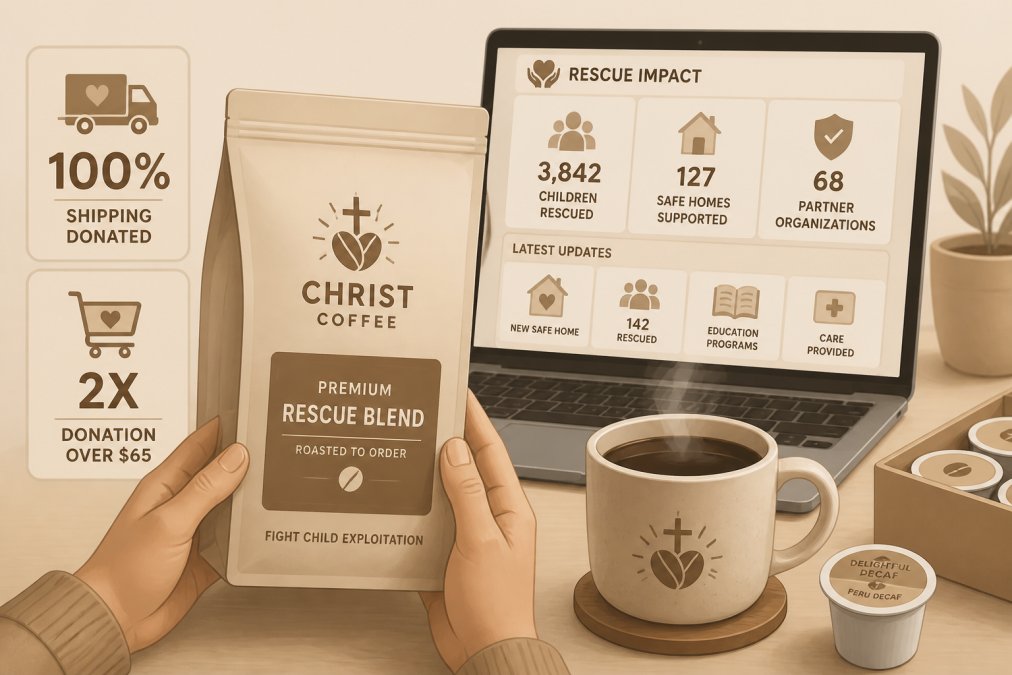
Christ Coffee: Fresh-Roasted Specialty Beans with Direct Rescue Impact
Christ Coffee delivers what most coffee subscriptions promise but rarely execute: fresh-roasted specialty-grade beans paired with transparent, measurable impact. Every bag is roasted to order only after your purchase, ensuring peak freshness and eliminating warehouse waste.
The impact model is straightforward. One hundred percent of the $5 standard shipping charge goes to rescue-focused partners. Orders exceeding $65 qualify for double donation impact. This structure means regular subscribers, ordering monthly at $26-$30 per bag, contribute meaningful funding to organizations fighting child exploitation while enjoying premium coffee.
The product lineup includes versatile options. Jesus' Java ($25.99) is the signature medium blend, smooth and balanced for everyday brewing. New Morning Mercies ($25.99) is the breakfast option, bright and inviting. Strong & Courageous ($25.99) delivers the darkest roast for bold coffee lovers. Single-origin options like Ethiopia ($29.99), Colombia ($29.99), and Bali Blue ($29.99) offer specialty-grade complexity from shade-grown, smallholder farms.
Bundle options amplify impact. The Premium Rescue Blend Bundle ($66.29) includes three signature blends and triggers the double donation threshold. The Single Origin Saving Blend Bundle ($76.49) features three single origins, Bali Blue, Colombia, and Ethiopia, each shade-grown using natural, pesticide-free methods. The Flavored Freedom Blend Bundle ($66.29) offers caramel, vanilla, and cinnamon blends for those who prefer sweetness.

What sets Christ Coffee apart: roasting-to-order eliminates the freshness compromise that plagues most subscriptions. Most roasters roast in bulk and ship from warehouse stock; Christ Coffee roasts only when your order confirms. This adds 5-7 days to delivery but guarantees beans at peak flavor. The satisfaction guarantee removes purchase friction, if the coffee doesn't meet expectations, replacement is no-questions-asked.
The audience fit is intentional. Faith-driven individuals seeking to align daily routines with Christian values find purpose in every cup. Socially conscious home brewers prioritize the anti-trafficking mission. Ethical consumers with disposable income appreciate specialty-grade quality paired with verifiable impact. This positioning attracts customers willing to pay premium prices because the mission justifies the cost.
Fair Trade and Single-Origin Alternatives
Fair trade certification provides a standardized impact framework that mission-driven coffee brands use to communicate farmer support. Fair trade-certified coffees guarantee minimum prices to producers, typically 10-15% above commodity rates, plus community development premiums. This model works well for consumers who want third-party verification of ethical practices.
Single-origin coffees from mission-driven roasters offer traceability advantages. When a brand sources from a specific region, Ethiopia, Colombia, or Bali, and names the farming cooperative or group, customers can trace their purchase to actual communities. This transparency builds trust that generic blends cannot match.
The tradeoff between fair trade certification and direct trade relationships matters. Fair trade is audited and standardized, making it easier for consumers to verify claims. Direct trade, where roasters work directly with farmers and skip middlemen, can deliver higher farmer payments but requires consumers to trust the roaster's reporting. Mission-driven brands that publish supply chain details and partner transparently tend to combine both models.
How to Identify Ethical Coffee Brands
Identifying truly ethical coffee brands requires moving beyond marketing claims to examine actual practices. Several indicators separate genuine mission-driven brands from those using ethics as a sales tactic.
Verify the supply chain story. Ethical brands name their farming partners, regions, and cooperatives. They explain how farmers are paid, whether through fair trade minimums, direct relationships, or premium pricing. Vague language like "ethically sourced" without specifics signals weak commitment. Strong brands publish detailed sourcing information, sometimes with farmer photos and stories.
Check donation transparency. Mission-driven coffee brands clearly state what percentage of revenue goes to impact work and which organizations receive funding. Christ Coffee's model exemplifies this: 100% of shipping charges plus double donations on orders over $65. This specificity allows customers to calculate actual impact per purchase.
Evaluate certification status. Look for third-party certifications like Fair Trade USA, Organic, or Rainforest Alliance. These certifications require audits and ongoing compliance, making them harder to fake than unverified claims. Shade-grown and bird-friendly certifications indicate environmental commitment. Organic certification confirms pesticide-free farming.
Assess roasting practices. Fresh-roasted coffee tastes measurably better than warehouse-aged stock. Ask whether the brand roasts to order or maintains inventory. Roasting-to-order is more operationally complex but guarantees freshness. This practice also reduces waste, unsold inventory never becomes stale.
Review customer feedback. Authentic reviews reveal whether the brand delivers on its promises. Consistent five-star ratings with detailed comments about both taste and impact suggest genuine satisfaction. Be skeptical of reviews that only praise the mission without evaluating coffee quality.
Examine the website transparency. Ethical brands publish annual impact reports, partner organization details, and farmer payment structures. They answer customer objections directly. Brands hiding behind vague mission statements or avoiding specific claims warrant skepticism.
Fair Trade vs. Direct Trade: Understanding the Difference
Fair trade and direct trade are two distinct models for ensuring farmer welfare, and understanding the difference helps you choose brands aligned with your values.
Fair trade certification is a standardized, third-party audited system. Fair Trade USA certifies that producers receive minimum prices, typically $1.40 per pound for washed Arabica, plus additional premiums for quality, organic status, and community development projects. Farmers in fair trade cooperatives collectively decide how to spend development premiums on education, infrastructure, or equipment. This model scales well and provides predictable income floors for producers.
The limitation: fair trade focuses on price floors rather than maximizing farmer income. Middlemen still exist in the supply chain, taking margins. The certification process requires membership fees and audits, which smaller producers sometimes struggle to afford.
Direct trade bypasses middlemen entirely. Roasters work directly with farmers or farm groups, negotiating prices based on quality and relationship. Direct trade typically pays 15-30% above fair trade minimums because no intermediaries take cuts. Roasters visit farms, build relationships, and adjust prices based on cupping scores and market conditions.
The limitation: direct trade lacks standardized verification. Consumers must trust the roaster's reporting. There's no third-party audit confirming that promised prices actually reach farmers. Brands claiming direct trade without publishing farmer names and payment details are making unverifiable claims.
Mission-driven coffee brands often combine both models. They source some coffees through fair trade partnerships for scale and verification, while maintaining direct relationships with select farmer groups for premium single-origins. This hybrid approach balances transparency with operational efficiency.
Sustainable Farming Practices and Environmental Impact
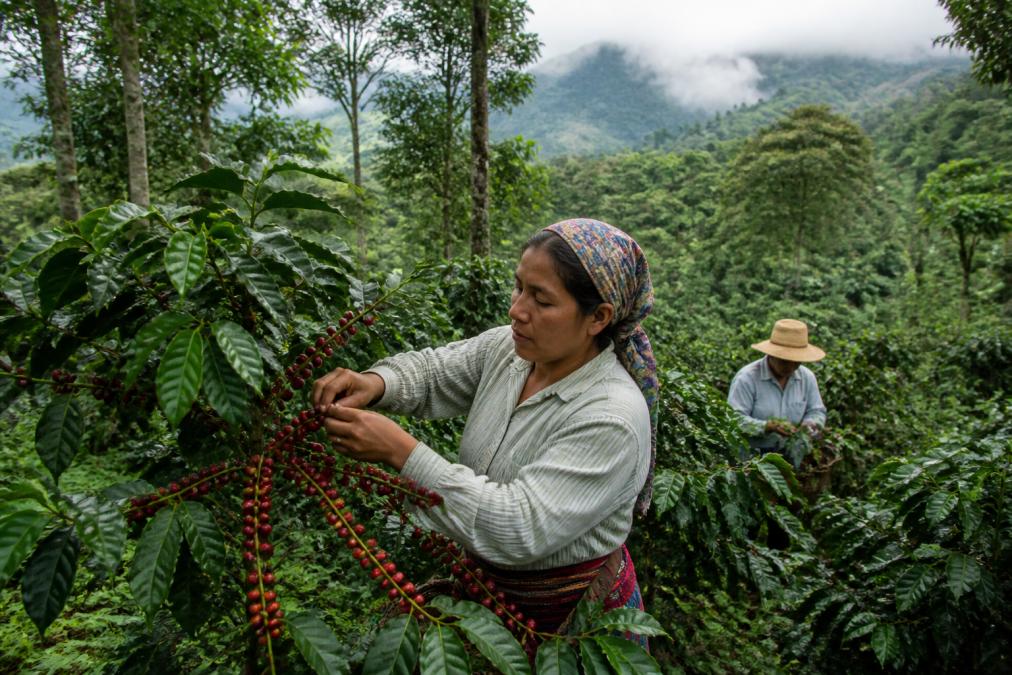
Sustainable coffee farming practices directly affect both environmental health and farmer economics. The best mission-driven coffee brands source from farms implementing agroforestry, shade-growing, and regenerative methods that improve soil health while supporting biodiversity.
Shade-grown coffee is the foundation of sustainable farming. Coffee plants grown under a canopy of taller trees, often native species, require fewer chemical inputs, maintain soil moisture, and create habitat for birds and wildlife. Shade-grown methods produce lower yields per acre than sun-exposed monocultures, but higher quality beans and ecosystem benefits offset reduced volume. Farms using shade-growing typically reduce pesticide use by 50-70% compared to industrial operations.
Agroforestry systems go further, integrating multiple crops and tree species. Farmers grow coffee alongside bananas, cacao, or fruit trees, creating diversified income and building soil structure. These systems improve carbon sequestration, reduce erosion, and increase resilience to climate variability. Smallholder farmers in agroforestry systems report 15-25% higher income stability because crop diversity buffers against coffee price volatility.
Organic certification requires three years of pesticide-free farming before certification. Certified organic coffees prohibit synthetic fertilizers, herbicides, and fungicides. This standard protects water sources, soil microbiota, and farmer health. The tradeoff is lower yields during transition years and higher production costs, which is why organic coffee commands premium pricing.
Water conservation matters in coffee-growing regions facing climate stress. Water-efficient processing mills reduce consumption by 50-80% compared to traditional wet-processing methods. Some farms capture rainwater, implement drip irrigation, and use treated wastewater for secondary crops. These practices become critical as drought pressures increase across equatorial regions.
Carbon footprint reduction in coffee production spans the entire supply chain. Direct-trade relationships shorten shipping routes by consolidating orders. Roasting-to-order eliminates warehouse storage emissions. Sustainable packaging, compostable bags or recyclable materials, reduces end-of-life waste. Some mission-driven brands calculate and offset their carbon footprint, publishing net-zero or carbon-negative claims with third-party verification.
Evaluating Transparency and Supply Chain Traceability
Supply chain traceability transforms ethical claims from marketing statements into verifiable facts. The strongest mission-driven coffee brands publish detailed information about where beans originate, how farmers are compensated, and how impact funds are distributed.
Traceability technology has advanced significantly. Blockchain systems now track coffee from farm to cup, creating immutable records of origin, processing, and shipping. QR codes on bags link customers to farmer stories, cupping notes, and impact metrics. Some brands publish GPS coordinates of farms, allowing customers to verify locations independently.
Third-party audits provide credibility. Mission-driven brands that undergo annual audits of their supply chain, impact claims, and donation distributions demonstrate accountability. Audit reports published on company websites signal confidence in their practices.
Farmer payment documentation separates genuine brands from greenwashing. Transparent brands publish minimum prices paid, quality premiums, and direct trade percentages. They name farming partners, cooperatives, family farms, or producer groups, making claims verifiable. Christ Coffee partners with organizations like Destiny Rescue and A21, publishing how shipping donations and order premiums fund specific rescue operations.
Impact reporting converts donations into measurable outcomes. The best brands publish annual reports showing how many children were rescued, how many farming families received training, or how many acres transitioned to sustainable practices. Vague claims like "supporting farmers" lack the specificity that demonstrates real change.
Post-consumer waste management is an emerging traceability concern. Mission-driven brands increasingly track what happens to coffee bags after purchase. Compostable packaging, mail-back programs, and recycling partnerships reduce landfill impact. Some brands partner with organizations that collect used bags for repurposing or recycling.
| Evaluation Criteria | What to Look For | Red Flags |
|---|---|---|
| Supply Chain | Named farms, regions, cooperatives | Vague "ethically sourced" claims |
| Farmer Compensation | Published minimum prices, quality premiums | No price transparency |
| Impact Funding | Specific organizations, measurable outcomes | Generic "supports communities" language |
| Certifications | Fair Trade USA, Organic, Rainforest Alliance | No third-party verification |
| Roasting | Fresh-roasted to order, arrival timeframe | Warehouse stock, unknown roast dates |
| Transparency | Published sourcing details, impact reports | Hidden supply chain information |
Conclusion
The best mission-driven coffee brands deliver three non-negotiable elements: specialty-grade coffee roasted fresh, verifiable ethical practices, and transparent impact mechanisms that let customers calculate their contribution to rescue and community work.
Christ Coffee exemplifies this standard. With fresh-roasted specialty beans arriving 5-7 days after roast, 100% of shipping charges directed to rescue partners, and double donation impact on orders over $65, the brand combines premium quality with measurable social change. The satisfaction guarantee removes purchase risk, and the personalized quiz helps customers find their ideal roast profile.
Start with the Premium Rescue Blend Bundle ($66.29) or Single Origin Saving Blend Bundle ($76.49) to experience the quality and trigger the double donation threshold. Both bundles deliver specialty-grade complexity while maximizing your impact on the fight against child exploitation.

Frequently Asked Questions
What makes a coffee brand truly mission-driven?
A mission-driven coffee brand demonstrates measurable social or environmental impact beyond profit. Look for direct partnerships with rescue organizations, transparent donation structures, and verifiable third-party certifications. Christ Coffee, for example, dedicates 100% of its $5 standard shipping charge to anti-trafficking partners like Destiny Rescue and A21, with double donations on orders over $65. Authentic mission-driven brands publish impact reports and allow customers to trace exactly where their money goes.
What certifications should I look for in ethical coffee?
Key certifications include Fair Trade Certified, Rainforest Alliance, Bird Friendly, and organic certification. Fair Trade ensures farmers receive living wages and work under safe conditions. Rainforest Alliance verifies environmental stewardship and worker rights. Bird Friendly certification confirms shade-grown practices that protect ecosystems. Organic certification means pesticide-free cultivation. Mission-driven brands often combine multiple certifications with direct relationships to farming cooperatives, offering greater transparency than certification alone.
Are mission-driven coffee brands more expensive than regular coffee?
Mission-driven specialty coffee typically costs more per pound than grocery store brands, but the price difference reflects quality, freshness, and verified social impact. Christ Coffee's specialty-grade beans start at $25.99 per bag, roasted to order for peak freshness. When you factor in the direct donation impact, 100% of shipping goes to rescue efforts, the actual cost per cup often compares favorably to buying pre-roasted bulk coffee while delivering measurable change.
How can I verify if a coffee brand is ethically sourced?
Check for supply chain transparency by looking for farm names, cooperatives, or regions where beans are sourced. Ethical brands publish detailed sourcing information and partner with organizations that audit their supply chains. Request third-party certification documents and impact reports. Visit the brand's website for specific details about farmer relationships and environmental practices. Christ Coffee details its single-origin coffees by region and farming method, allowing customers to understand exactly where their coffee comes from and the sustainable practices used.
What is the difference between fair trade and direct trade coffee?
Fair Trade relies on third-party certification and guarantees minimum prices and safe working conditions through established standards. Direct Trade involves direct relationships between roasters and farmers, often resulting in higher prices paid to producers and greater transparency. Fair Trade offers broader consumer recognition and certification assurance. Direct Trade typically offers more traceability and stronger farmer relationships but requires more research to verify claims. Many mission-driven brands combine elements of both approaches to maximize farmer benefit and environmental stewardship.
Ready to align your morning routine with your values? Shop Christ Coffee and join customers who've made their daily coffee ritual a force for rescue and hope.
This article was written using GrandRanker