

Table of Contents
- Why Freezing Isn't Always the Best Solution
- Best Coffee Storage Containers for Room Temperature
- The Cool Dark Place Method
- How Long Does Brewed Coffee Stay Fresh Refrigerated
- Signs of Stale Coffee Beans and When to Replace Them
- Impact of Roast Level on Storage Success
- Fresh Roasted Coffee as Your Best Insurance
- Conclusion
Last Updated: August 29, 2026
Why Freezing Isn't Always the Best Solution
Most coffee enthusiasts assume freezing is the gold standard for preservation. The logic seems sound: cold slows degradation, so frozen beans should stay fresher longer. But the reality is more nuanced, and for many home brewers, freezing actually works against what makes specialty coffee worth buying in the first place.
The problem starts with condensation. Every time you open a freezer and pull out a bag of beans, temperature swings create moisture on the surface. That moisture accelerates oxidation and degrades the aromatic compounds that define a coffee's flavor profile. Freeze-thaw cycles also damage cell structure within the bean, making grind uniformity harder to achieve and extraction quality less predictable.
Here's what most guides miss: fresh, specialty-grade coffee, the kind roasted to order and shipped directly to your door, is designed to be consumed within weeks, not months. At Christ Coffee, we roast from real orders rather than warehouse stock, which means your beans arrive at peak freshness. Storing them properly for two to four weeks is a completely different problem than trying to extend shelf life for six months.
The real question isn't whether you can freeze coffee. You can. The question is whether you should, given the alternatives available today. For most home brewers, especially those investing in specialty-grade beans, the alternatives to freezing coffee beans deliver better flavor and require less fussing.
Best Coffee Storage Containers for Room Temperature
Room temperature storage works beautifully when you use the right container. The key variables are opacity, airtightness, and stability. You're protecting beans from three enemies: light, oxygen, and temperature fluctuation.
Airtight Canisters and Opaque Containers
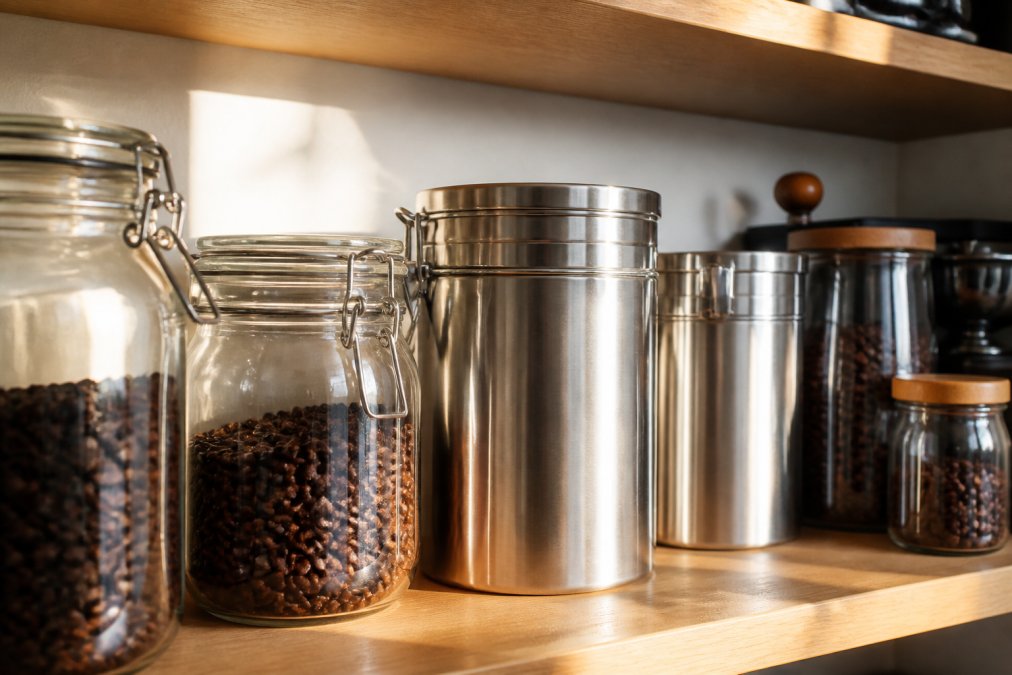
An airtight canister in an opaque material is the simplest, most effective storage solution for most home brewers. Glass canisters with rubber seals or stainless steel containers with locking mechanisms create an environment where oxygen exposure is minimal and light cannot degrade volatile oils.
Look for containers specifically labeled as airtight, not just "sealed" or "closable." The difference matters. A true airtight seal means oxygen cannot enter once you've closed the lid. This prevents oxidation at the surface of your beans and extends the freshness window significantly compared to bags left partially open or stored in standard containers.
Opacity is equally critical. Clear glass looks beautiful on a shelf, but light, especially direct sunlight and even fluorescent light, accelerates lipid degradation and breaks down aromatic compounds. Opaque containers (dark glass, ceramic, or stainless steel) protect your beans from this invisible threat.
Capacity should match your consumption rate. A container that's too large creates excess headspace, which means more oxygen above the beans. A container that's too small forces you to open and close it constantly. Most home brewers do well with a one to two-pound capacity.
Valve Bags and Nitrogen-Flushed Packaging
If you're buying coffee in bulk or prefer not to transfer beans immediately, valve bags represent a middle ground between freezing and standard storage. These bags feature a one-way valve that allows carbon dioxide (released during degassing) to escape while preventing oxygen from entering.
Nitrogen-flushed packaging takes this further. During roasting, beans release CO2 for several days. Nitrogen flushing replaces the oxygen in the bag with inert nitrogen gas, which cannot participate in oxidation. This extends shelf life dramatically compared to standard bags.
The trade-off is convenience. Valve bags work best when left sealed until you're ready to use them. Once opened, they lose their advantage. For home brewers who buy fresh coffee regularly, as opposed to stockpiling, valve bags are unnecessary. But for those who prefer to buy larger quantities at once, they're a legitimate alternative to freezing.
Many specialty roasters, including Christ Coffee, ship coffee in packaging designed to preserve freshness during transit. The roast date is printed on the bag so you know exactly how fresh your beans are when they arrive. This transparency matters because it tells you how long your beans have already been stored and how much of their optimal window remains.
The Cool Dark Place Method
The simplest storage solution is also one of the most effective: a cool, dark place at room temperature. This doesn't mean your kitchen counter. It means a cabinet, pantry, or closet where temperature stays relatively stable and light never reaches.
Temperature stability matters more than absolute temperature. Beans stored at a consistent 65 to 70 degrees Fahrenheit will stay fresher longer than beans subjected to daily swings between 60 and 75 degrees (peer-reviewed research). Avoid areas near heat sources, ovens, radiators, sunlit windows, where temperature fluctuates or warmth accelerates degradation.
Dark is non-negotiable. Light exposure, even ambient indoor light, degrades flavor over time. A closed cabinet or opaque container in a cool pantry is ideal. Some brewers use a kitchen drawer, which provides darkness and usually maintains stable temperature.
This method requires almost no equipment beyond what you already have. Transfer your beans from the bag they arrive in to an airtight container, place it in a cool dark space, and you're done. No freezer, no special equipment, no condensation risk.
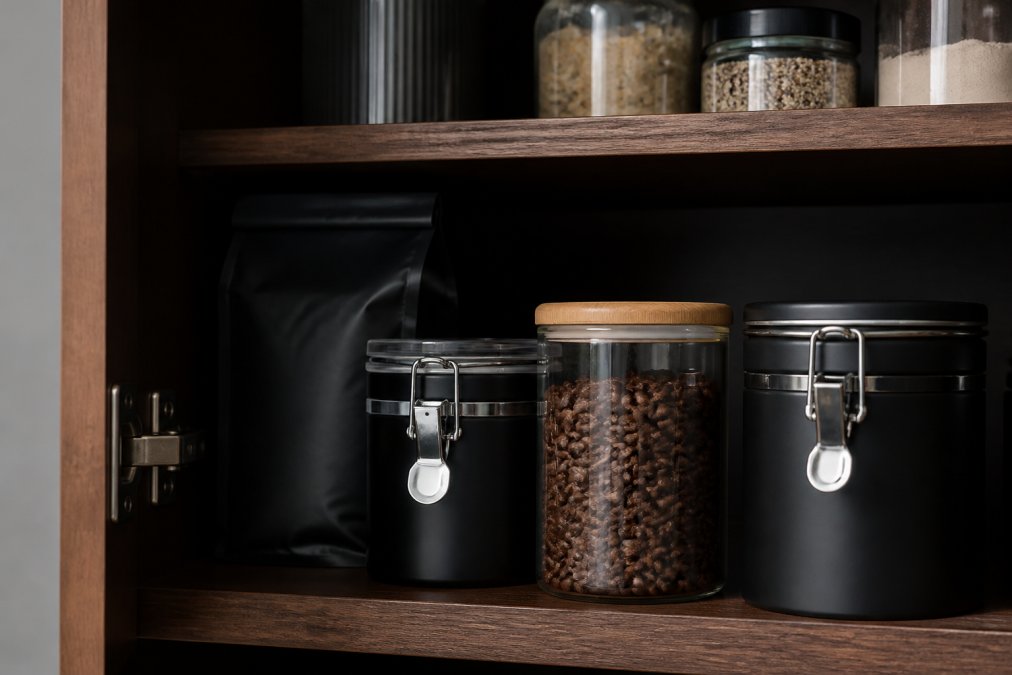
The cool dark place approach works because it respects the bean's actual needs. Coffee doesn't need to be frozen to stay fresh for the two to four weeks most home brewers take to consume a bag. It needs to be protected from light, oxygen, and temperature swings. A cool dark cabinet does exactly that.
How Long Does Brewed Coffee Stay Fresh Refrigerated
Once you've brewed your coffee, refrigeration becomes relevant, but with important caveats. Brewed coffee deteriorates much faster than whole beans because the brewing process exposes the coffee to oxygen and breaks down cell structure.
Brewed coffee stays fresh in the refrigerator for about 24 to 48 hours (the FDA). After that, oxidation and microbial growth degrade flavor significantly. The exact timeline depends on how the coffee was brewed, the temperature of your refrigerator, and whether the container is sealed.
Storing brewed coffee in an airtight container extends freshness compared to an open cup. A sealed glass jar or thermos keeps oxygen exposure minimal. But even sealed, brewed coffee loses flavor compounds daily. By day three, the taste difference becomes obvious to most palates.
This is why brewing fresh is always superior to storing brewed coffee. If you're thinking about refrigerating brewed coffee to extend its life, you're better off storing whole beans instead and brewing fresh each morning. The flavor difference is dramatic.
Some brewers use brewed coffee for cold brew concentrate or iced coffee, which masks some of the flavor degradation that occurs during storage. But for hot coffee consumed hot, fresh brewing is the only way to get the full benefit of specialty-grade beans.
Signs of Stale Coffee Beans and When to Replace Them
Knowing when beans have passed their prime helps you avoid brewing with stale coffee. Several signs indicate that beans have degraded beyond their optimal window.
Aroma is the first and most reliable indicator. Fresh beans release fragrant oils when you open the container. Stale beans smell flat, muted, or slightly off. If you open your container and the aroma is weak, the beans are past their peak.
Visual changes also signal degradation. Fresh beans have an oily sheen on the surface (especially in lighter roasts). As beans age, they lose this sheen and may appear dull or chalky. This visual change correlates with loss of volatile oils that contribute to flavor.
Grind uniformity suffers in stale beans. Degraded cell structure makes beans more brittle and prone to uneven grinding. If your grinder is producing inconsistent particle sizes despite proper settings, your beans may be stale.
Extraction quality declines noticeably. Stale beans under-extract, producing sour, thin coffee even with correct brewing parameters. If your coffee tastes thin or sour despite using proper technique, beans are likely the culprit.
Roast date is your most objective guide. Coffee is at peak freshness 5 to 14 days after roasting (peer-reviewed research). It remains excellent through about 30 days. After 30 days, degradation accelerates noticeably. After 60 days, most specialty coffee has lost significant flavor complexity.
This timeline assumes proper storage, cool, dark, airtight conditions. Improper storage (warm, light-exposed, open containers) compresses this window significantly. It's another reason why alternatives to freezing coffee beans matter: proper room-temperature storage keeps beans fresher longer than freezer storage with condensation risk.
Impact of Roast Level on Storage Success
Roast level affects how quickly beans degrade and which storage method works best. Understanding this nuance helps you match storage to your specific coffee.
Light roasts have higher surface area exposure due to less oil development during roasting. They're more susceptible to oxidation than darker roasts. Light roasts benefit from slightly shorter storage windows and more careful protection from oxygen exposure. Airtight containers and cool dark places are essential.
Medium roasts represent a middle ground. They have moderate oil development and reasonable oxidation resistance. They store well in standard airtight containers at room temperature for the full 30-to-60-day window.
Dark roasts have the most oil on the surface, which paradoxically makes storage trickier. Those oils can become rancid if exposed to heat or oxygen for extended periods. Dark roasts actually benefit from cool storage and airtight protection, but they don't require freezing. Room-temperature storage in excellent conditions works fine.
Espresso roasts (typically very dark) are designed for immediate use. They're at peak freshness within days of roasting and begin degrading noticeably after two to three weeks. If you're buying espresso roast, consume it quickly rather than storing it long-term.
The roast date printed on your bag matters more than the roast level. Regardless of roast, beans roasted more recently are fresher and more forgiving of storage mistakes. Beans that are already two weeks old when they arrive need more careful storage than beans roasted yesterday.
This is why Christ Coffee's model, roasting from real orders rather than warehouse stock, makes a tangible difference. Your beans arrive fresher, which means they perform better in simple room-temperature storage and give you a wider window before quality declines noticeably.
Fresh Roasted Coffee as Your Best Insurance
The most effective alternative to freezing isn't a storage method at all. It's receiving fresh roasted coffee regularly enough that storage becomes a non-issue.
Fresh roasted coffee arrives at peak flavor. The first 14 days after roasting are when specialty beans taste their absolute best. If you receive fresh coffee every two to three weeks, you're always brewing within that optimal window. Storage method matters far less when your beans are always fresh.
This approach also eliminates the freeze-thaw cycle problem entirely. You never need to freeze what arrives fresh and gets consumed quickly. You avoid condensation, cell structure damage, and the flavor loss that comes with long-term storage.
Many home brewers find that switching to regular fresh coffee shipments, instead of buying in bulk and storing, actually costs less than managing frozen inventory. Bulk purchases require upfront capital and storage space. Fresh shipments arrive on a schedule that matches consumption, which reduces waste.
Specialty roasters who ship fresh coffee directly (like Christ Coffee, which typically delivers 5 to 7 days after roast) make this approach practical. You get beans at their peak, shipped to your door, with a satisfaction guarantee if anything isn't perfect. The freshness premium is worth it for the flavor difference alone.
Consider your actual consumption rate. If you brew daily or every other day, fresh coffee on a regular schedule is the simplest, most effective solution. You skip storage complexity entirely and always have excellent beans ready to brew.
Conclusion
The best alternatives to freezing coffee beans depend on your consumption habits, storage space, and how much you value flavor complexity. For most home brewers, a combination of room-temperature storage in an airtight opaque container and regular fresh coffee shipments delivers superior results compared to freezing.
Freezing creates condensation risks and cell structure damage that undermine the quality of specialty-grade beans. The cool dark place method is simpler, more reliable, and produces better flavor. Airtight canisters protect beans from oxygen and light without the drawbacks of temperature cycling.
The real game-changer is receiving fresh roasted coffee regularly enough that long-term storage becomes unnecessary. This eliminates storage decisions altogether and ensures you're always brewing with beans at peak freshness.
If you're serious about specialty coffee flavor, the storage method matters, but fresh roasted beans matter more. Christ Coffee delivers fresh, specialty-grade coffee roasted to order and shipped directly to your door, arriving 5-7 days after roast at peak freshness. Every purchase supports rescue-focused partners fighting child exploitation, with 100% of the $5 standard shipping charge and double donations on orders over $65 going directly to organizations like Destiny Rescue and A21. Get started with Christ Coffee and experience how fresh roasted beans transform your daily brew.
Frequently Asked Questions
Is it better to freeze coffee beans or store them at room temperature?
Room temperature storage in an airtight container typically preserves flavor better than freezing. Freezing introduces moisture condensation and temperature fluctuations that degrade aromatic compounds and volatile oils. For whole bean coffee, a cool dark place maintains grind uniformity and extraction quality without the risk of freezer burn. Freezing works only if beans stay sealed and frozen solid, any thawing cycle damages cell structure and accelerates flavor loss.
What is the best type of container for storing coffee beans?
Opaque airtight containers are ideal for coffee storage. They block light exposure, which causes oxidation and lipid degradation. Look for vacuum-sealed options or valve bags that allow degassing while preventing oxygen entry. Glass canisters with tight-sealing lids work well if stored away from windows. Avoid clear containers and paper bags, which expose beans to light and moisture. Chamber vacuum or nitrogen-flushed packaging extends shelf life significantly compared to standard bags.
How long can you keep coffee beans fresh without freezing them?
Whole beans stay fresh for 2-4 weeks at room temperature in an airtight container, depending on roast date and roast level. Light roasts degrade faster than dark roasts because they retain more volatile oils and aromatic compounds. Check the roast date on your bag, fresher beans last longer. Once ground, beans lose freshness within days due to increased surface area. Store beans in a cool dark place, away from heat and humidity, to maximize shelf life without freezing.
What are the primary enemies of coffee bean freshness?
Light, heat, moisture, and oxygen degrade coffee quality. UV exposure triggers oxidation and breaks down aromatic compounds. Temperature fluctuations, especially in freezers, cause moisture condensation that creates freezer burn and damages cell structure. Humidity accelerates mold risk and flavor loss. Oxygen exposure causes lipid degradation and stale flavors. Ambient storage in a cool dark place, sealed in opaque airtight containers, protects against all four enemies. Roast level also matters: lighter roasts are more vulnerable to oxidation than darker roasts.
This article was written using GrandRanker